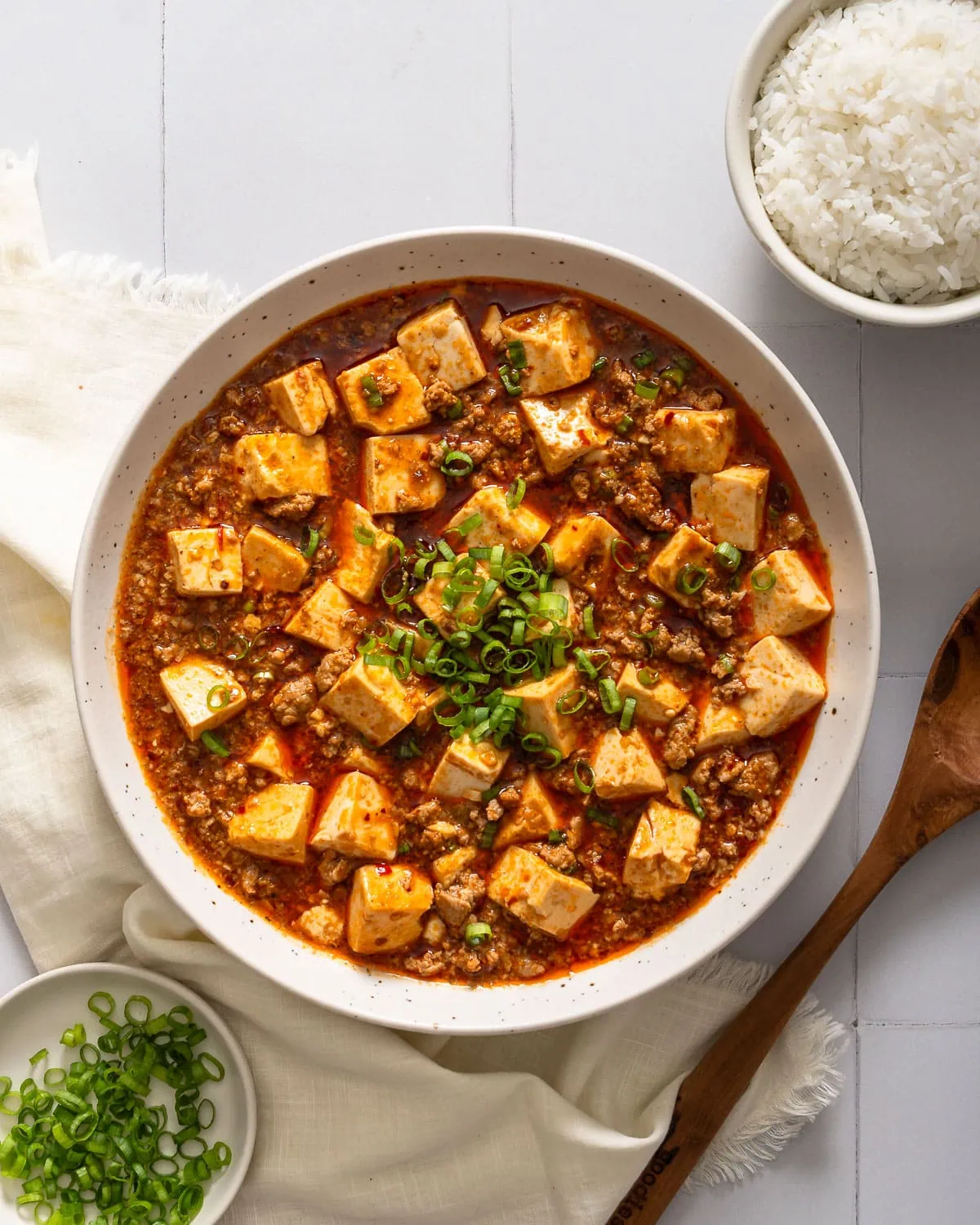
This easy mapo tofu recipe features silken tofu and ground pork cooked in an addicting spicy, savory sauce.
This Post May Contain Affiliate Links. Please Read Our Disclosure Policy.
Let’s make an easy and spicy Sichuan mapo tofu in under 30 minutes! This popular Chinese tofu dish simmers silken tofu and ground pork in a spicy, savory sauce made with Sichuan peppercorns, which provides a tingling, mouth-numbing sensation.
Each bite of this spicy mapo tofu is packed with spicy and savory flavors that will keep you coming back for more. Pair this Sichuan mapo tofu with steamed rice and a side of garlic green beans for a delicious and easy weekday dinner.
Mapo tofu (麻婆豆腐, ma po dou fu) is a popular Chinese tofu dish originating from the Sichuan province. The name translates to “pockmarked grandma’s tofu.” This tofu dish is known for its bold, spicy, and mouth-numbing features.
Mapo tofu typically features soft tofu cubes and ground pork or beef simmered in a spicy sauce made from doubanjiang, Sichuan peppercorns, and chili oil.
Ingredients
You can find all these mapo tofu ingredients at your local Chinese or Asian grocery market. Full measurements and links to all the ingredients I used are listed in the recipe card below.
Ground Pork Seasoning
Ground pork is the main protein.
Shaoxing Wine: adds complexity and tenderizes the meat.
Light Soy Sauce: adds a salty umami flavor.
Ginger and Garlic: are the core aromatics for this Sichuan mapo tofu.
Mapo Tofu Sauce
Doubangjiang: spicy broad bean sauce is a MUST-have ingredient. No substitutions can be made for this ingredient.
Sichuan Peppercorns, or hua jiao, add the iconic mouth-numbing and tingly sensation. Be sure to toast them slightly on the stove before cooking
Five Spice Powder: adds a unique sweetness and warmth to the mapo tofu sauce.
Granulated Sugar: balances the heat level and adds a touch of sweetness
Silken Tofu: is the softest form of tofu.
Green Onion: adds another aromatic layer.
Sesame Oil: for a nutty, finish.
Cornstarch: acts as the sauce thickener.
What is doubanjiang?
Doubanjiang (豆瓣酱)(là dòubàn jiàng, or tobanjiang), also known as spicy broad bean paste or spicy fermented bean paste, is the key ingredient for mapo tofu. It is typically reddish brown and has a chunky texture. Doubanjiang is made from fermented broad beans, soybeans, salt, rice, and other spices. The fermentation creates a spicy, deep, earthy, and rich umami flavor.
Different brands yield different levels of spiciness and saltiness. I used Lee Kum Kee doubanjiang in this recipe, but for a more authentic flavor, use Pixian broad bean paste, which is from a small Sichuan province.
Substitutions and Additions
Substitutions
Protein: ground beef, ground chicken, or shiitake mushrooms.
Stock: instead of Chicken stock, you can use water or vegetable stock.
Tofu: firm, medium, or soft tofu.
Additions
Vegetables: bell peppers, mushrooms, snow peas, and baby corn.
Spice level: for added spiciness, add more Sichuan peppercorns or chili oil.
Aromatics: cilantro, extra garlic, or extra ginger.
Oyster sauce: for added umami and salty flavor.
How to Make Mapo Tofu
Here are the easy-to-follow steps for how to make this mapo tofu recipe.
Mix the ground pork, Shaoxing wine, light soy sauce, and ginger.
Heat one tablespoon of oil in a wok until hot. Add the garlic and saute until fragrant, about 1 minute. Next, add the pork and doubanjiang, toss to combine for 4-5 minutes.
Add the Sichuan ground peppercorns, low-sodium chicken stock, chili oil, chicken bouillon powder, five-spice powder, and sugar. Mix until combined. Bring the mixture to a boil.
Mix the cornstarch and water separately. Then add the cornstarch slurry to the wok and gently stir until the sauce thickens.
Spread the tofu evenly on top of the pork. Carefully scoop the pork and sauce underneath, and fold the tofu on top of the pork until everything is coated, about 2 minutes.
Add the sesame oil and green onion and stir until incorporated. Remove from the heat.
Garnish with a sprinkle of Sichuan peppercorn and serve with a bowl of steamed rice. Enjoy!
Expert Tips
Toast the Sichuan peppercorns. Before grinding the peppercorns, lightly toast them on a skillet over medium heat for 30 seconds to 1 minute to enhance their flavor, reduce the bitterness, and enhance the tingling numbing sensation.
Handle the tofu with care. For silken tofu, it tends to fall apart really easily. When you add in the tofu cubes, do not move them too much, and use a spoon to pour the hot sauce on top of the tofu to heat them up.
Use good-quality chili oil. Use store-bought chili oil or make your own with this homemade chili oil recipe.
Taste and adjust based on preferences. Taste your spicy mapo tofu as you cook and adjust the spices and seasonings based on your preferences. Different brands of doubanjiang and chili oil will vary in flavor and spice levels.
Storage Instructions
Allow the mapo tofu to cool completely to room temperature and then store it in an airtight container in the refrigerator for up to 5 days.
Reheat: microwave covered until warm, or cook on the stovetop in a pot with a lid, stirring occasionally until warm.
Freeze: you can make mapo tofu in advance and then freeze it in an airtight container in the freezer for up to 3 months. Note that the tofu texture may become denser and chewier when freezing. Defrost in the refrigerator overnight before reheating.
Pairing Suggestion
This mapo tofu recipe can be paired on its own with a bowl of steamed rice for dinner or with the following pairing suggestions.
Traditionally, soft or silken tofu is used for its melt-in-your-mouth texture. You can use medium, firm, or extra firm tofu, which is less likely to fall apart when mixing.
Do I need to blanch the tofu first?
No. However, if you are concerned about the soft texture falling apart, you can blanch the cubes in boiling salted water for 2 minutes to firm up the tofu, which will prevent it from breaking apart as easily during cooking.
Can I make mapo tofu vegetarian or vegan?
Yes! you can make a vegetarian or vegan mapo tofu by omitting the pork and using mushrooms or any other plant-based ground meat substitute. Also, substitute the chicken stock and chicken bouillon powder for vegetable stock and mushroom powder.
Why is my mapo tofu sauce not thickened?
Ensure the mapo sauce has come to a slight boil before adding the cornstarch slurry. Keep simmering the sauce until it eventually thickens. If that does not work, add another teaspoon of cornstarch until it thickens.
Marinate the pork. In a medium mixing bowl, add ground pork, Shaoxing wine, light soy sauce, and ginger. Mix until combined.
Add the garlic, pork, and doubanjiang. In a wok or large skillet over medium heat, heat 1 tablespoon of vegetable oil until hot. Add the garlic and saute until fragrant, about 1 minute. Next, add the pork and doubanjiang and break them into small bits. Mix and combine until the spicy chili bean paste and pork have cooked through, about 4-5 minutes.
Add the remaining ingredients. Add the Sichuan ground peppercorns, low sodium chicken stock, chili oil, chicken bouillon powder, five spice powder, and sugar. Mix until combined. Bring the mixture to a boil.
Add cornstarch slurry. In a small bowl, mix the cornstarch and water until combined. When it reaches a boil, add the cornstarch slurry and gently stir until the sauce thickens.
Add tofu. Spread the tofu evenly on top of the pork and using a large spoon carefully scoop the pork and sauce underneath and fold on top of the tofu until everything is coated. Cook for 2 minutes until the tofu is warm.
Add green onion and sesame oil. Add the sesame oil and green onion and gently stir until just incorporated. Remove from the heat.
Serve. Garnish with a sprinkle of Sichuan peppercorn more green onion. Serve with a bowl of steamed rice. Enjoy!







Is it in imperial measurment
Hi! All the measurements are written below in the recipe card!
This is such a good recipe! I’ve made mapo tofu using your recipe about 10 times now, great every time!
Thank you Dianna! I am so happy to hear that you love my recipe!