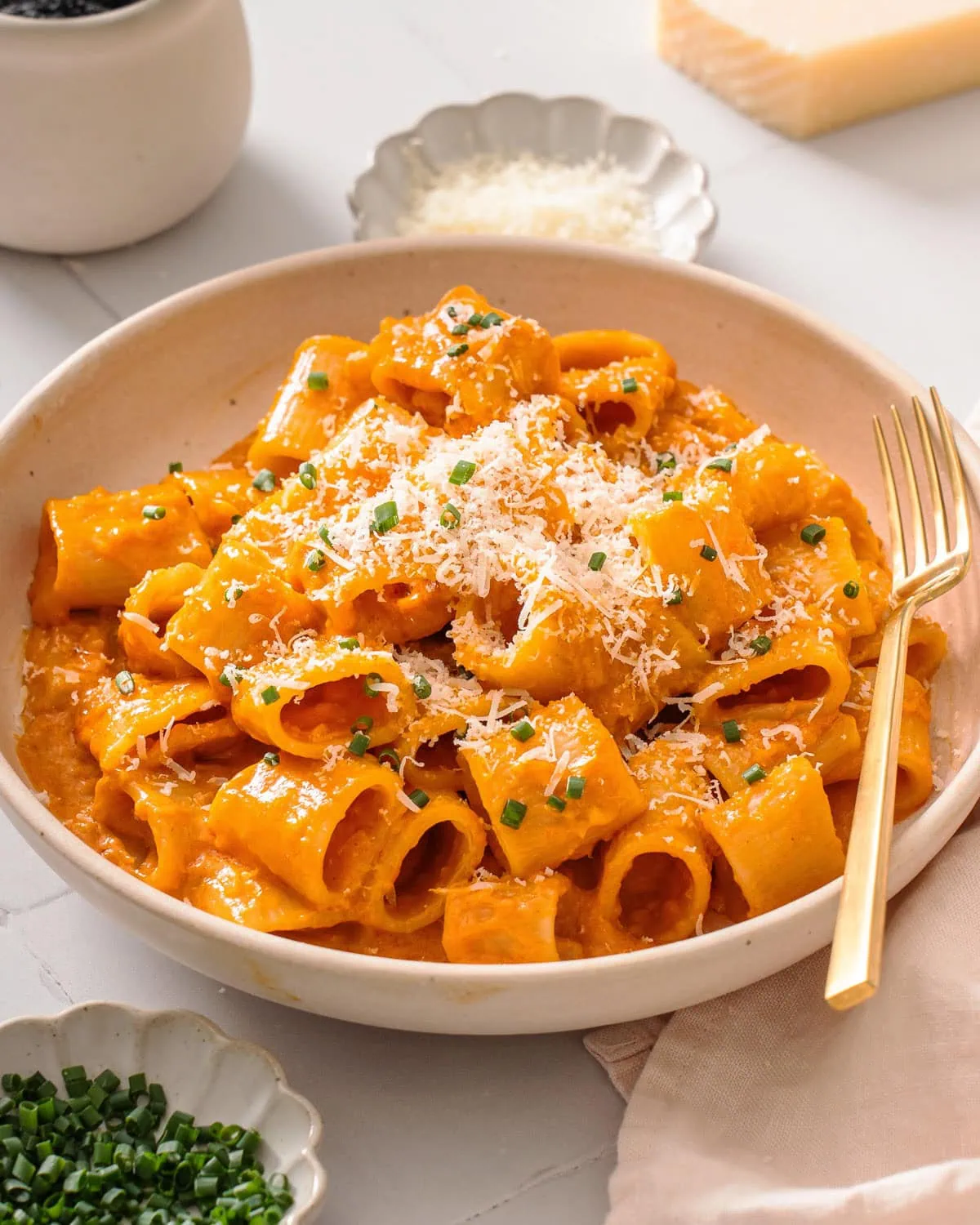
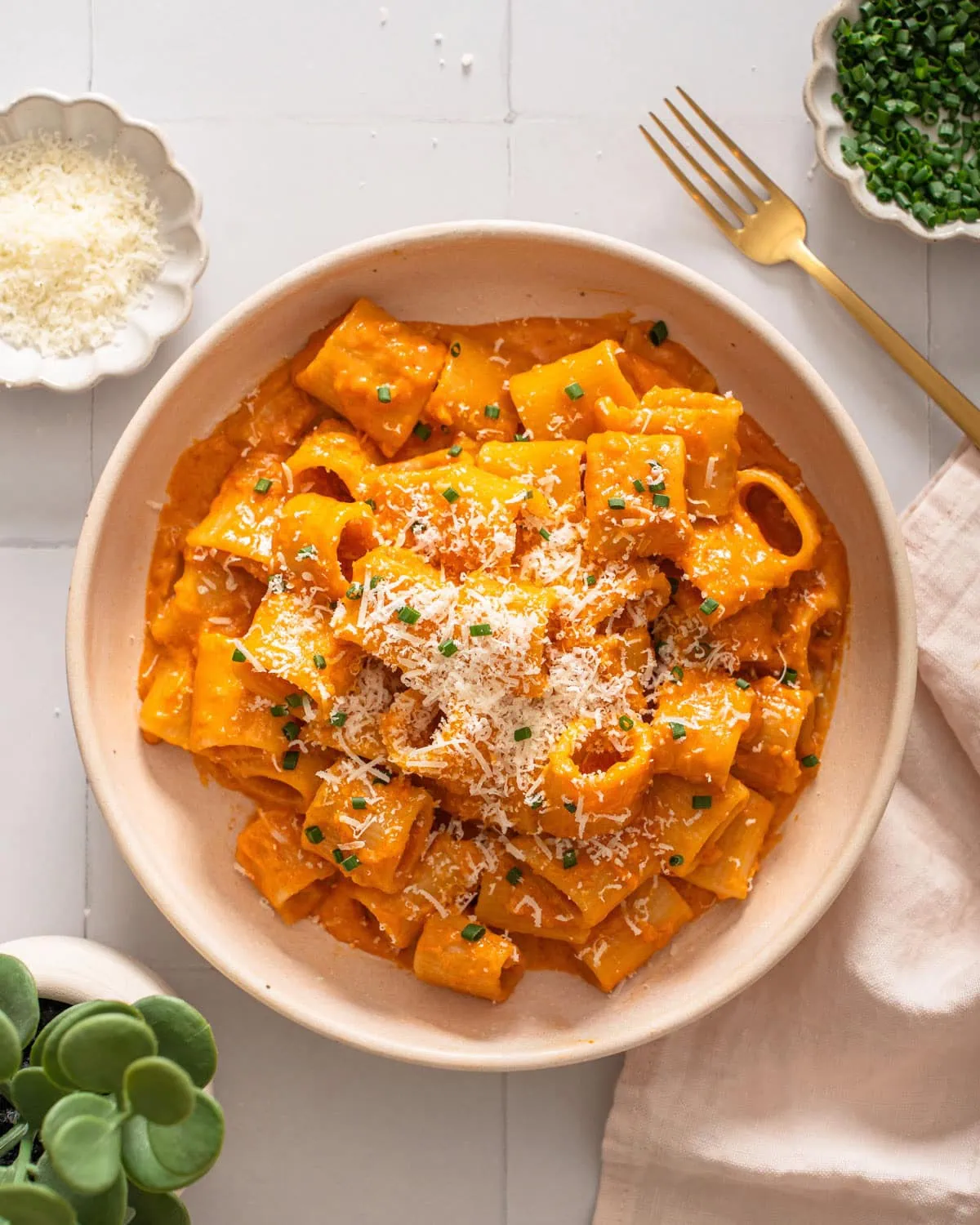
Bold, spicy, and creamy, Korean-Italian pasta made in under 20 minutes. This pasta blends the spicy and slightly sweet Korean gochujang chili paste with creamy and savory Italian pasta sauce techniques for the ultimate easy weeknight dish.
Bold, spicy, and creamy, Korean-Italian pasta made in under 20 minutes. This pasta blends the spicy and slightly sweet Korean gochujang chili paste with creamy and savory Italian pasta sauce techniques for the ultimate easy weeknight dish.
This is probably the most delicious Korean fusion pasta I have ever eaten. It is similar to vodka pasta but has a deeper umami flavor that comes from the gochujang chili paste. The best part about this gochujang pasta recipe is that it is incredibly easy to make in under 20 minutes which makes it perfect for a quick lunch or dinner.
Gochujang pasta is a Korean and Italian fusion dish made that features gochujang, (고추장) a Korean fermented red chili paste. It is deep red, has a thick, viscose texture, and has a complex spicy, slightly sweet, and umami flavor. The gochujang is made with gochugaru, fermented soybeans, salt, and glutinous rice which acts as a perfect thickener to create a flavorful, pasta sauce that beautifully coats each pasta noodle.
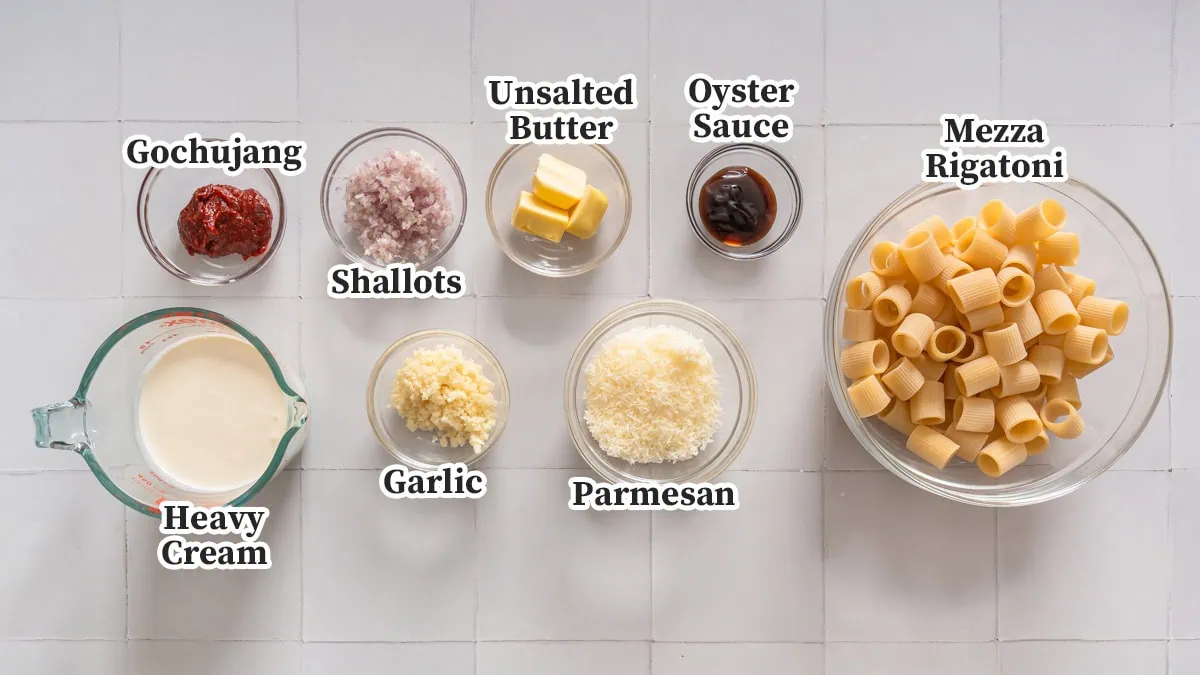
You can find all of the ingredients for this gochujang pasta recipe at your local grocery store. Full measurements and links to everything I used is listed in the recipe card below.
Dried Pasta: choose your favorite type of pasta! I used mezzi rigatoni for this recipe.
Garlic and shallots: are the main aromatics.
Butter: adds a layer of richness.
Gochujang: the star ingredient! It is a staple in Korean cuisine and is spicy, slightly sweet, savory and has a thick and sticky consistency.
Heavy Cream: is the main base of the sauce. It creates that silky, creamy, mouthfeel that is so addicting.
Oyster Sauce: adds a salty umami component to the dish.
Parmesan Cheese: freshly grated parmesan cheese elevates the dish by adding a rich, tangy, slightly nutty, savory flavor.
Pasta water: remember to reserve some pasta water to thin out the sauce before serving.
Substitutions and Additions
Substitutions
Olive oil: a different alternative to butter.
Half and half: for a less thick, and creamy pasta sauce, you can use half and half instead.
Soy sauce or Fish sauce: are good alternatives to oyster sauce that add a salty umami element.
Additions
Protein: chicken, shrimp, bacon, or tofu are good tofu options.
Vegetables: for a well balanced pasta dish, add mushrooms, bell peppers, zucchini, cherry tomatoes, kale, etc.
Spice: if you’d like more heat, you can add more gochujang or gochugaru.
How to Make Gochujang Pasta
Here are the step-by-step instructions on how to make gochujang pasta.
Bring a large pot of salted water to a boil over high heat. Cook the pasta until al dente according to the package instructions. Reserve 1/2 cup of pasta water
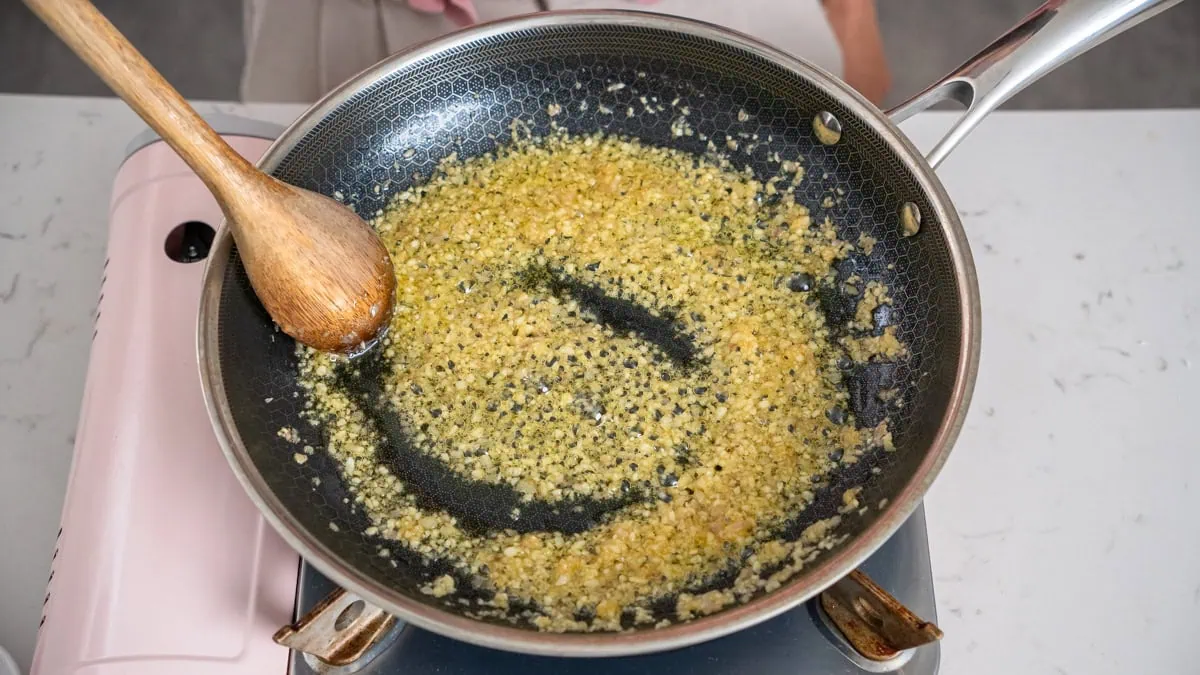
In a large skillet, melt your butter on medium-low heat. Add the minced garlic and diced shallots and saute until fragrant and lightly browned and caramelized about 2 minutes.
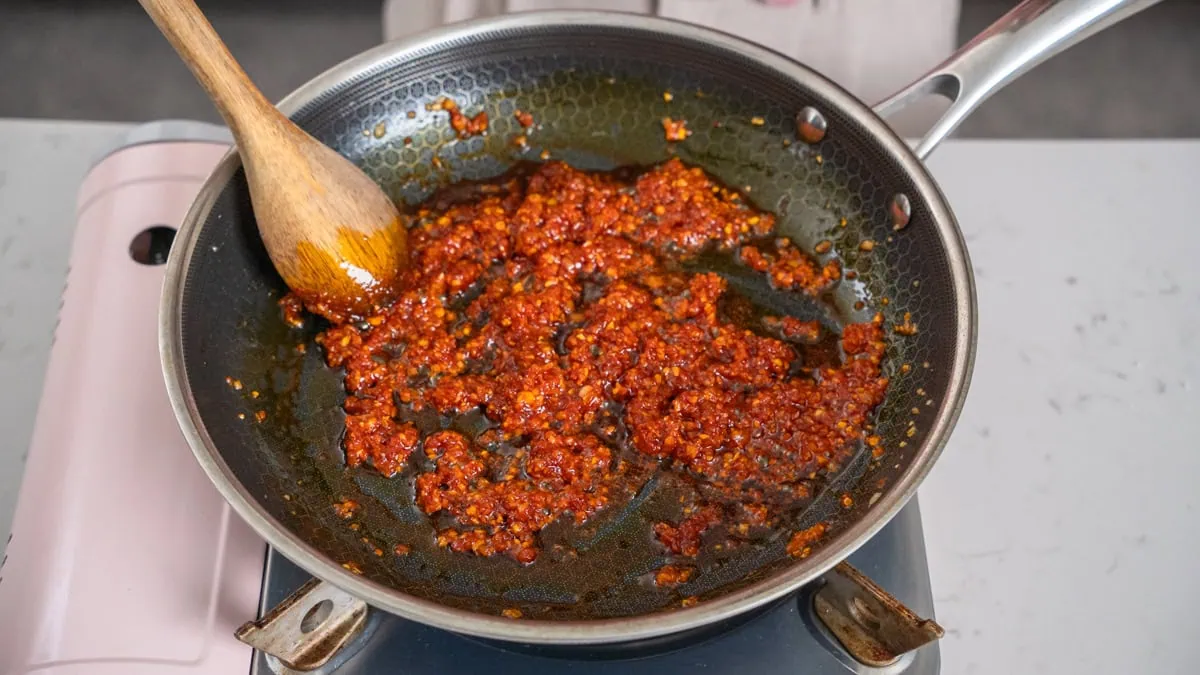
Add the gochujang and cook for about 2 minutes.
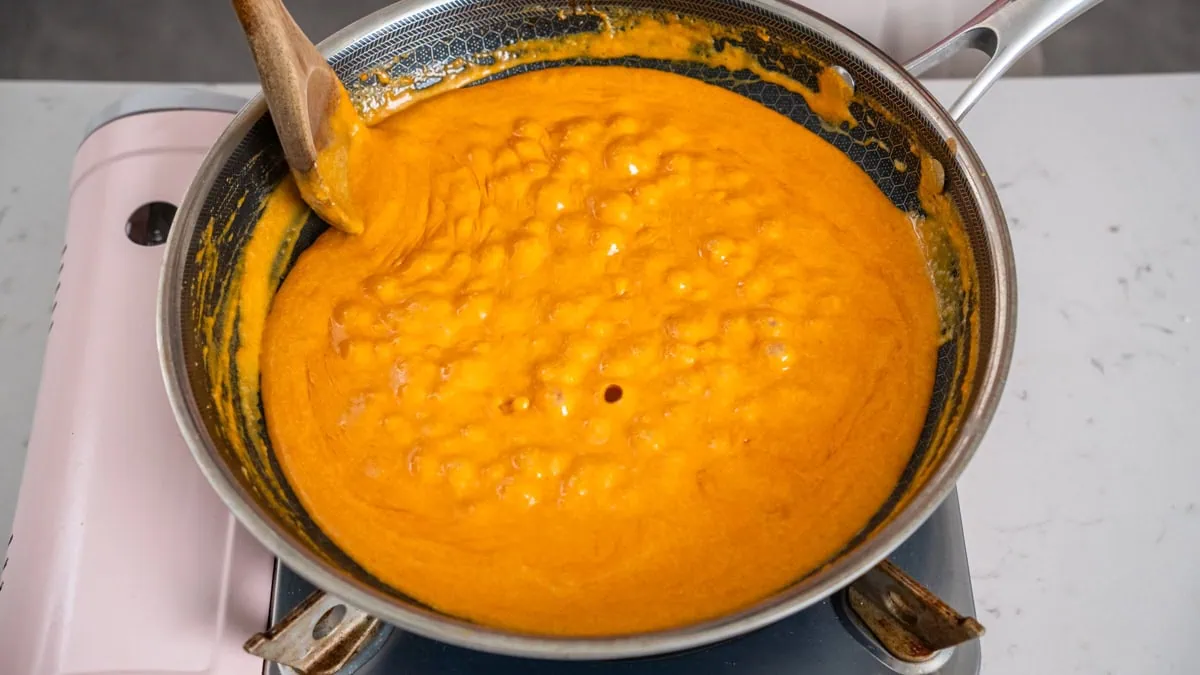
Add the heavy cream and oyster sauce. Mix to combine and cook until the sauce until the sauce thickens, about 4-5 minutes.
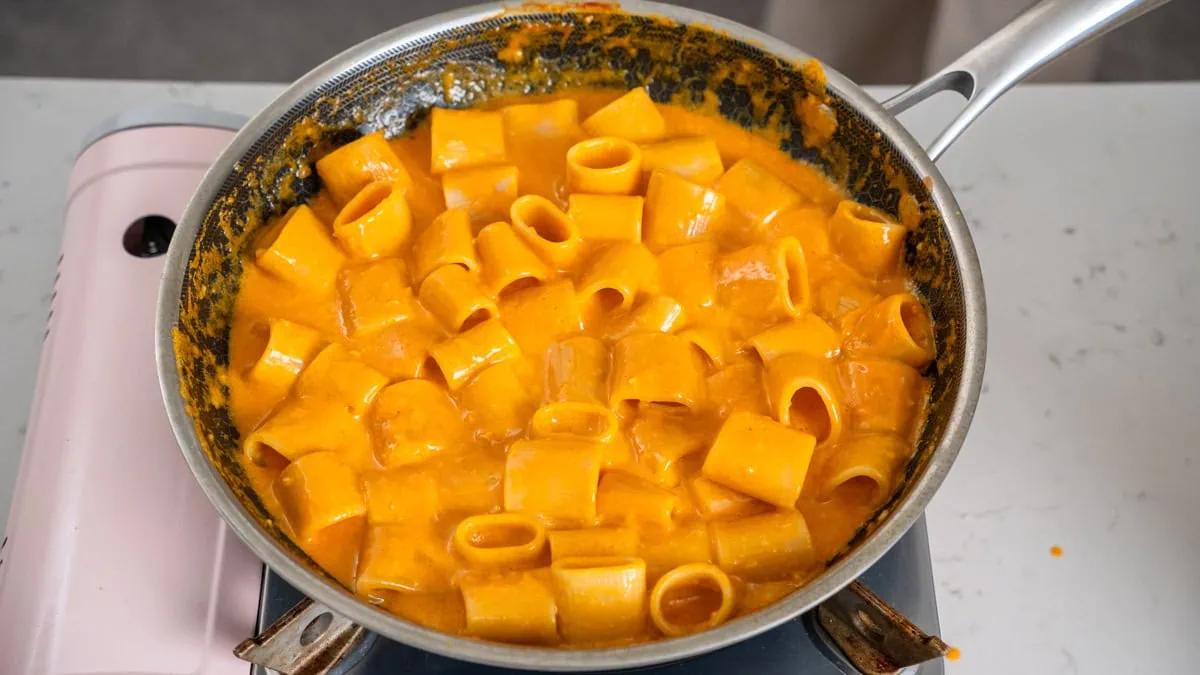
Then add the pasta and mix until combined. Add in the parmesan cheese and the pasta water and mix until everything is incorporated.
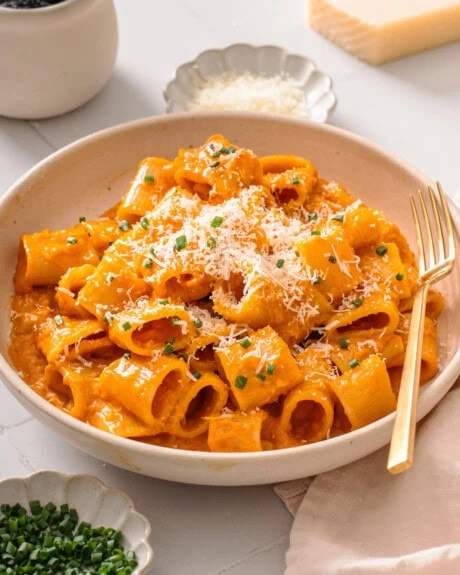
Top with chopped chives, and more freshly shredded parmesan cheese and enjoy!
Expert Tips
Saute the garlic and shallots on medium-low heat. This is an important step for a robust aromatic flavor. Make sure to cook the garlic and shallots low and slow until lightly golden brown.
Cook the gochujang for at least 1 minute. Toasting the chili paste and allows it time to mellow out the spice level.
Adjust gochujang based on spice tolerance. If you prefer a spicier pasta, add more gochujang.
Add more pasta water to thin out sauce. Add more pasta water if you feel like the sauce is too thick.
Storage Instructions
This gochujang pasta is best served immediately. But, you can store the pasta in an airtight container in the refrigerator for up to 5 days.
Reheat: gently heat it on a stovetop over low heat in a pan with a splash of water or milk stirring occasionally until warm or microwave covered with a wet paper towel until warm.
Pairing Suggestions
Serve this gochujang cream pasta as a main dish for lunch or dinner accompanied by the following suggestions.
This gochujang pasta recipe has a savory, spicy, and umami rich flavor with a creamy and cheesy texture.
Is this gochujang pasta really spicy?
No! I used a small amount of gochujang in this recipe, just enough to taste it without being overly spicy. Plus, cooking it for a couple minutes and incorporating it with butter and heavy cream mellows out the spiciness.
What type of pasta do I use?
Any type of pasta will work! I used mezzi rigatoni for this recipe, but have also used fusilli, penne, spaghetti or linguine in the past.
Bold, spicy, and creamy, Korean-Italian pasta made in under 20 minutes. This pasta blends the spicy and slightly sweet Korean gochujang chili paste with creamy and savory Italian pasta sauce techniques for the ultimate easy weeknight dish.
Ingredients
Servings: 4servings
8ozdried rigatoni pastarigatoni, fusilli, spaghetti etc.
Cook the pasta. Bring a large pot of salted water to a boil over high heat. Cook the pasta until al dente according to the package instructions, reserving 1/2 cup of pasta water.
Sauté the shallots and garlic. In a large skillet, melt the butter over medium-low heat. Add the minced garlic and diced shallots, and sauté until fragrant and lightly browned, about 2 minutes.
Add gochujang. Stir in the gochujang and cook for about 2 minutes. This will mellow out the heat from the spice.
Add heavy cream and oyster sauce. Pour in the heavy cream and oyster sauce. Mix to combine and cook until the sauce thickens, about 4-5 minutes.
Add the pasta. Then, add the pasta and mix until combined. Incorporate the parmesan cheese and the reserved pasta water, mixing until the sauce reaches a creamy consistency. Cook for an additional 1-2 minutes until everything is incorporated.
Serve. Top with chopped chives and more freshly shredded parmesan cheese, and enjoy!
Video
Notes
See the Expert Tips Section above for more guidance.
I have made this recipe so many times now. It’s one of my go to recipes. It’s so very filling and the right amount of spice. I usually add ground beef to mine. I always have a big tub of gochujung in my fridge and pantry since it’s a staple in my home since I cook a lot of Korean food.
I made this within 30 minutes including boiling the pasta. I used 8oz of dry fettuccine which was just the right amount for the sauce as described in the recipe. Subbed coconut aminos for soysauce but otherwise followed the recipe and it came out great!






I have made this recipe so many times now. It’s one of my go to recipes. It’s so very filling and the right amount of spice. I usually add ground beef to mine. I always have a big tub of gochujung in my fridge and pantry since it’s a staple in my home since I cook a lot of Korean food.
I’m so glad that you love it!
Delicious and easy
So happy you enjoyed it!
I made this within 30 minutes including boiling the pasta. I used 8oz of dry fettuccine which was just the right amount for the sauce as described in the recipe. Subbed coconut aminos for soysauce but otherwise followed the recipe and it came out great!