Easy, comforting, and delicious Korean rice cake soup (tteokguk) for your next Lunar New Year celebration.
This Post May Contain Affiliate Links. Please Read Our Disclosure Policy.
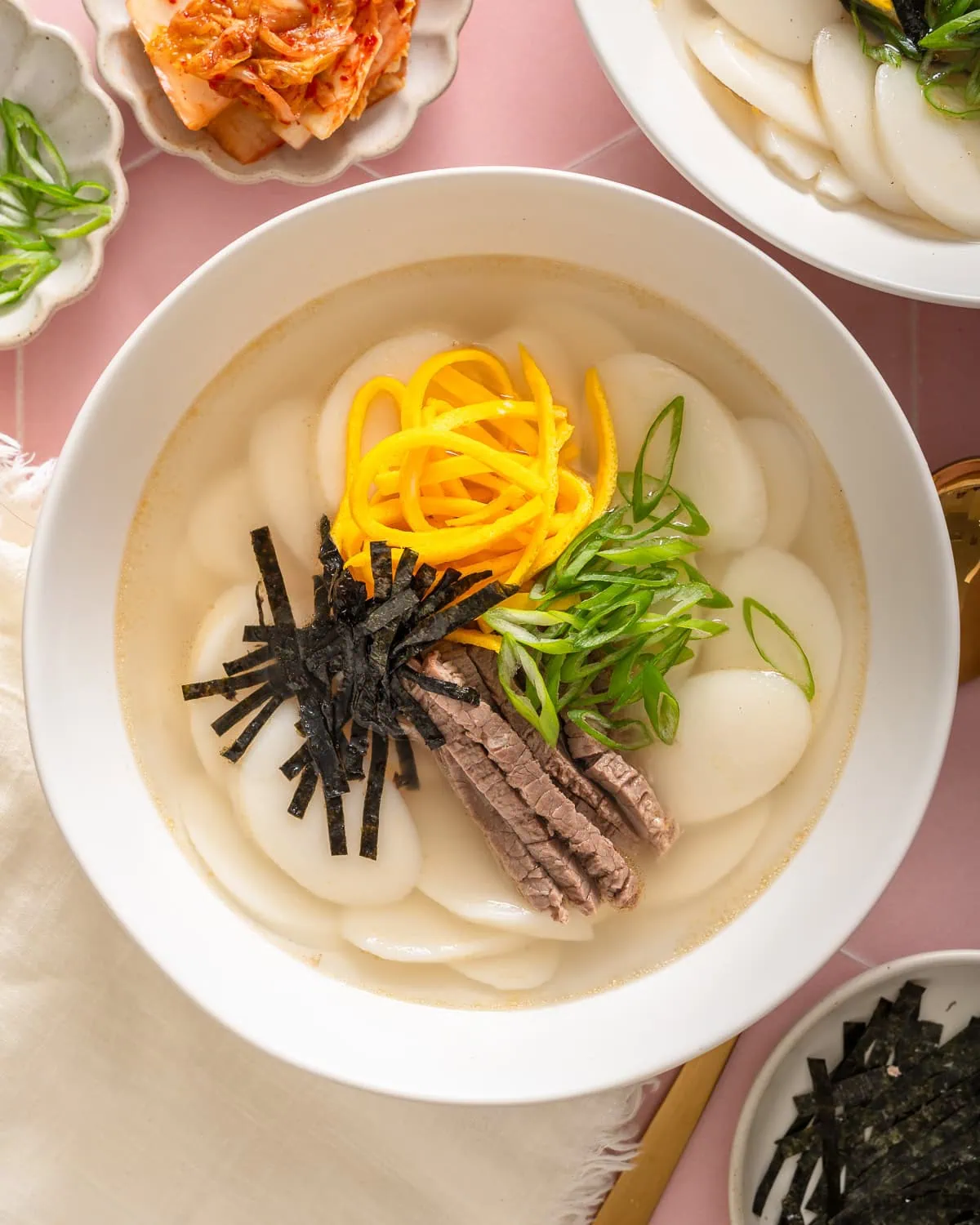
Korean rice cake soup, or tteokguk, is a Korean staple most commonly made on the Korean Lunar New Year. This cozy, satisfying Korean soup is really easy to make with just a handful of ingredients.
The best part about this easy soup is that you can customize it by swapping proteins, adding mandu (Korean dumplings), or using different broth bases! You can also make this rice cake soup recipe in advance and prep it for later.
Tteokguk is a Korean rice cake soup made with a homemade beef broth, thin, oval-shaped Korean rice cakes, and garnished with egg strips, seaweed, and green onion. It is often also made by adding kimchi mandu (Korean dumplings) to make tteok-manduguk.
You can find all of the ingredients for this Korean rice cake recipe at your local Korean grocery market. Full measurements and links to the ingredients I used are listed in the recipe card below.
Beef Brisket: the base of the beef broth and the main protein in the soup.
Green Onion and Garlic: are the main aromatics.
SoupSoySauce: to season the broth with a salty, umami-rich flavor.
Black Pepper: for added seasoning
Oval Sliced Rice Cakes: the most common type of rice cakes used in Korean soup. The cylindrical rice cakes are more commonly used in tteokbokki (Spicy Korean Rice Cakes).
Soysauce: Light soy sauce is a good alternative to soup soy sauce.
Additions
Vegetables: Korean radish, shiitake mushrooms, napa cabbage, zucchini, spinach.
Dumplings: any flavor of Korean mandu such as my kimchi mandu.
Eggs: whisked in eggs to create egg ribbons in the soup.
How to Make
Here are the step-by-step instructions for how to make this Korean rice cake soup (Tteokguk) recipe.
In a large pot, add water, beef, garlic, and green onion, and bring to a boil. Skim the scum. Once it reaches a boil, reduce the heat to medium, cover, and cook for 30 minutes.
Heat oil in a small pan over medium heat. Pour in the whisked egg yolk, then spread it across to form a thin crepe. Cook on both sides, then roll the egg and thinly slice it.
Remove the beef and let it rest for 10 minutes before shredding.
Add soy sauce, pepper, sesame oil, and rice cakes. Cook the rice cakes for about 3-4 minutes.
Garnish the tteokguk with the egg strips, seaweed and green onion.
Expert Tips
Simmer the broth gently. Simmer the broth gently and skim the scum off the top of the broth early to create a clear, clean broth.
Rinse the rice cakes. The easiest way to separate the fresh rice cakes and remove excess starch is to rinse them under cold water.
Season to taste. Taste the soup and season with soup soy sauce, and salt to taste.
Don’t cook the rice cakes too long. Watch the rice cakes and cook until they are just tender and begin to float, to prevent them from becoming overly mushy.
Storage Instructions
You can store the broth and rice cakes separately in airtight containers in the refrigerator for up to 3 days.
Reheat: reheat the Korean rice cake soup in a small pot on the stove over medium heat until warmed.
Freeze: You can freeze the broth alone in an airtight freezer safe container for up to 2 months. You should not freeze the rice cakes.
Pairing Suggestions
You can serve this Korean rice cake soup on its own, with kimchi mandu, or with the following pairing suggestions.
Bring soup to a boil. In a large pot, add water, beef, garlic, and green onion, and bring to a boil. Skim the scum off the surface. Once it reaches a boil, reduce the heat to medium, cover, and continue to cook for 30 minutes.
Make egg garnish. While the broth is cooking, heat 1 teaspoon of oil in a small pan over medium heat. Pour in the whisked egg yolk, then lift and tilt the pan to spread it across to form a thin crepe. Cook on both sides and transfer to a cutting board. Roll the egg and thinly slice it.
Slice the beef. Remove the beef and let it rest for 10 minutes before shredding into bite-sized pieces.
Add seasoning and rice cakes. Then add soy sauce, black pepper, sesame oil, and rice cakes. Cook the rice cakes until softened, about 3-4 minutes.
Serve. Garnish with the egg strips, seaweed, and green onion, and enjoy.







Rate & Review What did you think of this recipe?