Growing up, canh chua is one of those Vietnamese soups that always tastes like home. This Vietnamese sweet-and-sour soup features fresh fish, pineapple, tomatoes, and vegetables.
Growing up, canh chua is one of those Vietnamese soups that always tastes like home. This Vietnamese sweet-and-sour soup features fresh fish, pineapple, tomatoes, and vegetables.
This Post May Contain Affiliate Links. Please Read Our Disclosure Policy.
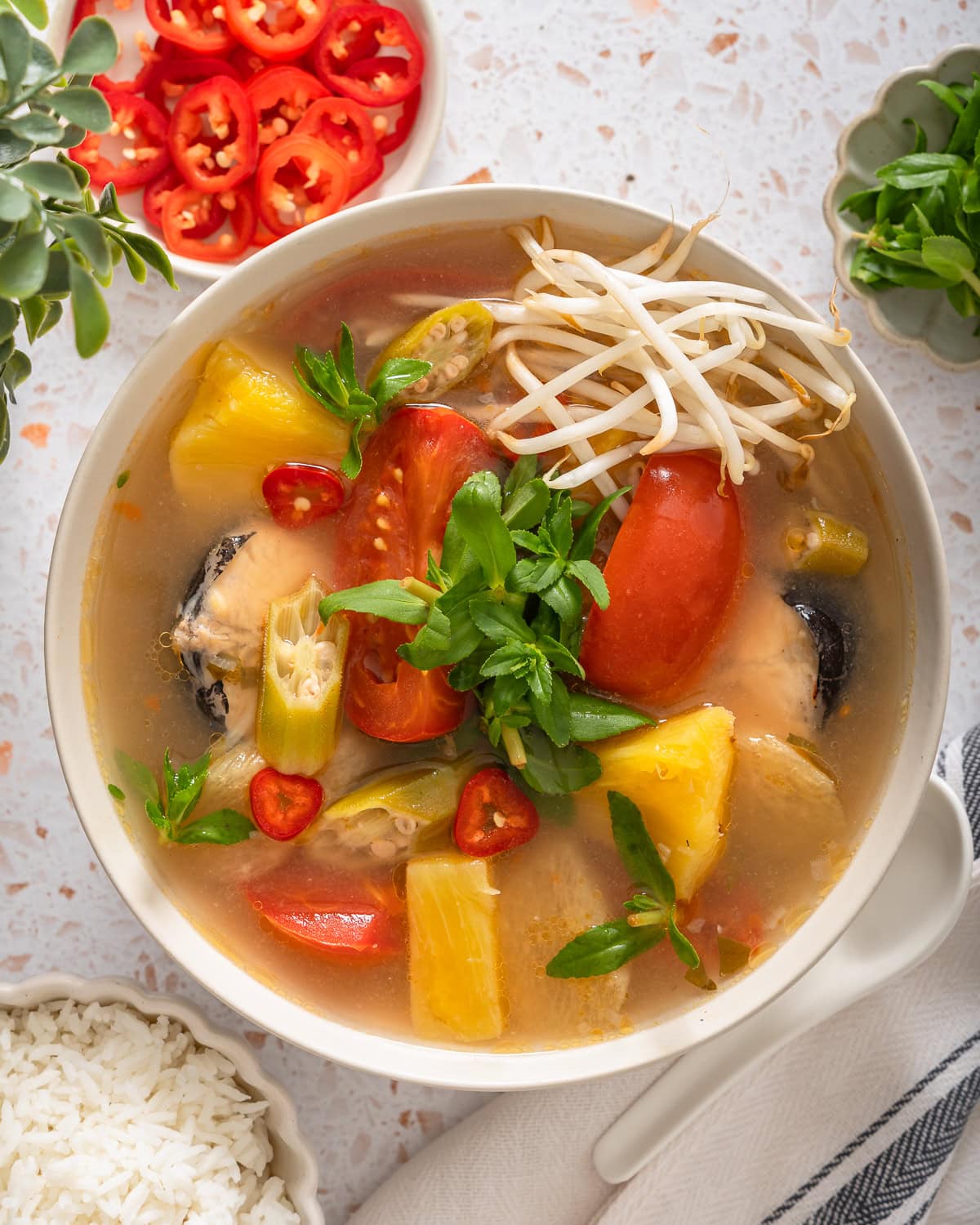
Sweet, sour, and packed with so many fresh flavors, canh chua is Vietnamese comfort food at its best. This classic home-cooked Vietnamese sweet and sour soup has the perfect delicate balance of sweet, savory, and tangy flavors. Tender catfish simmers in a tamarind-based broth with pineapple, tomato, okra, bean sprouts, and fresh Vietnamese herbs.
Canh chua is a traditional, comforting Vietnamesesoup that is sweet, sour, savory, and aromatic, associated with Southern Vietnam and the Mekong Delta. “Canh” refers to a type of home-cooked soup that is typically served with rice dishes, and “chua” in Vietnamese means sour.
It is made with a tamarind broth that cooks catfish or snakehead fish, pineapple, tomatoes, okra, bean sprouts, and elephant ear stems. It is then topped with ngo om (rice paddy herb) and ngo gai (culantro) for its distinctive aromatic flavor. Unlike other Vietnamese soups such as pho ga, canh chua is eaten with steamed white rice and other savory dishes, such as ca kho to (Vietnamese braised fish).
Ingredients
You can find all the ingredients for this canh chua recipe at your local Vietnamese grocery market. Full measurements and links to everything I used are in the recipe card below.
Tamarind Block: the defining ingredient that gives the soup its sour, tangy flavor. I like using a block instead of concentrate because it lets me control the “sour” level more easily. If using a block, you will need to soak it in hot water and strain the pulp before using. I use this same method to make my delicious pad thai too!
Shallot: the main aromatic flavor that adds aromatic depth.
Pineapple: adds the natural sweetness and fruity acidity that complements the tamarind.
Fish Sauce: adds salt and umami that balances the sweetness and acidity.
Sugar: balances the tamarind’s acidity.
Chicken Bouillon Powder: adds a comforting, savory depth and umami to the broth.
Catfish: is ideal because it has a slight sweetness and is firm enough to hold its shape when cooked. It is the main protein that gives the broth a subtle, rich, and savory flavor.
Roma Tomatoes: add acidity, sweetness, and color.
Okra: a tender, crisp vegetable that thickens the broth.
Elephant Ear Stem (bac ha): a porous, sponge-like vegetable that absorbs the broth and adds a crisp texture.
Bean Sprouts: add freshness and crunch. Despite its Vietnamese name bac ha, this ingredient isn’t mint.
Rice Paddy Herb (ngo om) is a signature herb in Vietnamese cuisine. It is bright and citrusy, with a slightly cumin-like aroma.
Sawtooth Coriander(ngo gai), this long-leaf herb, has a stronger cilantro-like flavor and is added at the end to keep it fresh and aromatic.
Substitutions and Additions
Substitutions
Fish: snakehead fish is traditionally used. For easier to find alternatives, use salmon or cod.
Pork ribs: instead of fish, you can alternatively simmer pork ribs in water for 2 hours before cooking the rest of the soup.
Other protein options include chicken, tofu, or beef.
Tamarind concentrate: instead of tamarind pulp, use 1/2 the amount of concentrate and adjust to taste.
Garlic: an alternative to shallots.
Canned or frozen pineapple: instead of fresh pineapple
Broth: chicken broth instead of chicken bouillon powder.
Additions
Shrimp: for added protein and sweetness in the broth.
Fried garlic: for added flavors and textures.
Heat: fresh bird’s-eye chilies.
How to Make
Here are the step-by-step instructions for how to make this canh chua recipe.
Mix the tamarind paste with boiling water and let it sit for about 5 minutes. Then mash thoroughly and strain through a fine mesh sieve.
Heat oil in a large pot over medium heat, then sauté the shallots for 1-2 minutes. Then add the pineapple.
Then add the water, tamarind concentrate, fish sauce, sugar, and chicken bouillon powder. Bring to a boil and then reduce to a simmer.
Then add catfish and cook for 5 minutes. Next, add the tomatoes, okra, and elephant ear stem and simmer for 2-3 minutes. Lastly, turn off the heat and add the bean sprouts, rice paddy herb, and sawtooth coriander.
Garnish with chilis and enjoy!
Expert Tips
If using tamarind concentrate, add the tamarind gradually. The concentrates vary significantly in strength. Start with less and add more to taste.
Skim the broth. As the fish cooks, foam may float to the surface. Skim the scum for a cleaner-tasting broth.
Add the vegetables in stages, as each requires a different cooking time. Avoid throwing them all in at the same time.
Add the bean sprouts and herbs at the end. These veggies only need seconds to cook. Add them at the end to preserve their flavor and texture.
Taste and adjust: this soup should taste tangy first, followed by subtle sweetness and a savory finish. Add more tamarind for sourness, sugar for sweetness or fish for saltiness and umami.
Storage Instructions
You can store any leftover canh chua in an airtight container in the refrigerator for up to 4 days.
Reheat: place the soup in a pot and warm over medium-high heat, covered, until hot. Alternatively, microwave covered until hot.
Freeze: cool the soup to room temperature, then freeze in a freezer-safe container for up to 3 months. For the best texture, freeze the fish and vegetables separately from the soup. Defrost in the refrigerator overnight before reheating.
Pairing Suggestions
Canh chua can be served with a bowl of steamed white rice or with the following pairing suggestions.
It has a nice balance of sour, sweet, salty, and savory flavors. The tamarind provides the tanginess, sugar and pineapple add sweetness, and the fish sauce and tomatoes give the salty, umami flavors. Fresh Vietnamese herbs brighten the soup with a fresh, aromatic flavor.
Can I use pork ribs instead of catfish?
Yes! My mom likes to use pork ribs instead of fish. For this, you will need to simmer the pork ribs in water for 90 minutes to 2 hours before adding the remaining ingredients.
Where do I find all of these ingredients?
Vietnamese grocery stores are your best bet for finding all of these ingredients in one place. Look for ngo om (rice paddy herb), ngo gao (culantro), and bac ha (elephant ear stem) in the fresh produce and herb section. They may even already package it all together. Some larger Chinese or Southeast Asian markets may carry them as well.
1cupokrastems removed, sliced into bite sized pieces
1stalkelephant ear stembac ha, peeled and cut into bite-sized pieces
1cupbean sprouts
½cuprice paddy herbngo om chopped
½cupsawtooth corianderor ngo gai or culantro, chopped
Garnish
Fresno Chilis
Instructions
Create tamarind concentrate. Mix the tamarind paste with 1/2 cup of boiling water and let it sit for about 5 minutes. Then mash thoroughly and strain through a fine mesh sieve, scraping as much tamarind as possible. Discard the pulp and seeds.
Sauté aromatics and pineapple. Heat 1 tablespoon of oil in a large pot over medium heat. Then sauté the shallots until lightly browned and fragrant, about 1-2 minutes. Then add the pineapple and sauté for 30-60 seconds.
Cook the soup. Then add the water, tamarind concentrate, fish sauce, sugar, and chicken bouillon powder. Bring to a boil, then reduce to a simmer for 3 minutes.
Add the catfish and veggies. Then add the catfish and cook for 5 minutes, skimming away any foam that floats to the surface. Next, add the tomatoes, okra, and elephant ear stem and simmer for 2-3 minutes. Lastly, turn off the heat, add the bean sprouts, rice paddy herb, and sawtooth coriander, and stir for 30-60 seconds or until just softened.
Serve. Garnish with Fresno chilis and serve with a bowl of steamed white rice. Enjoy!







Rate & Review What did you think of this recipe?