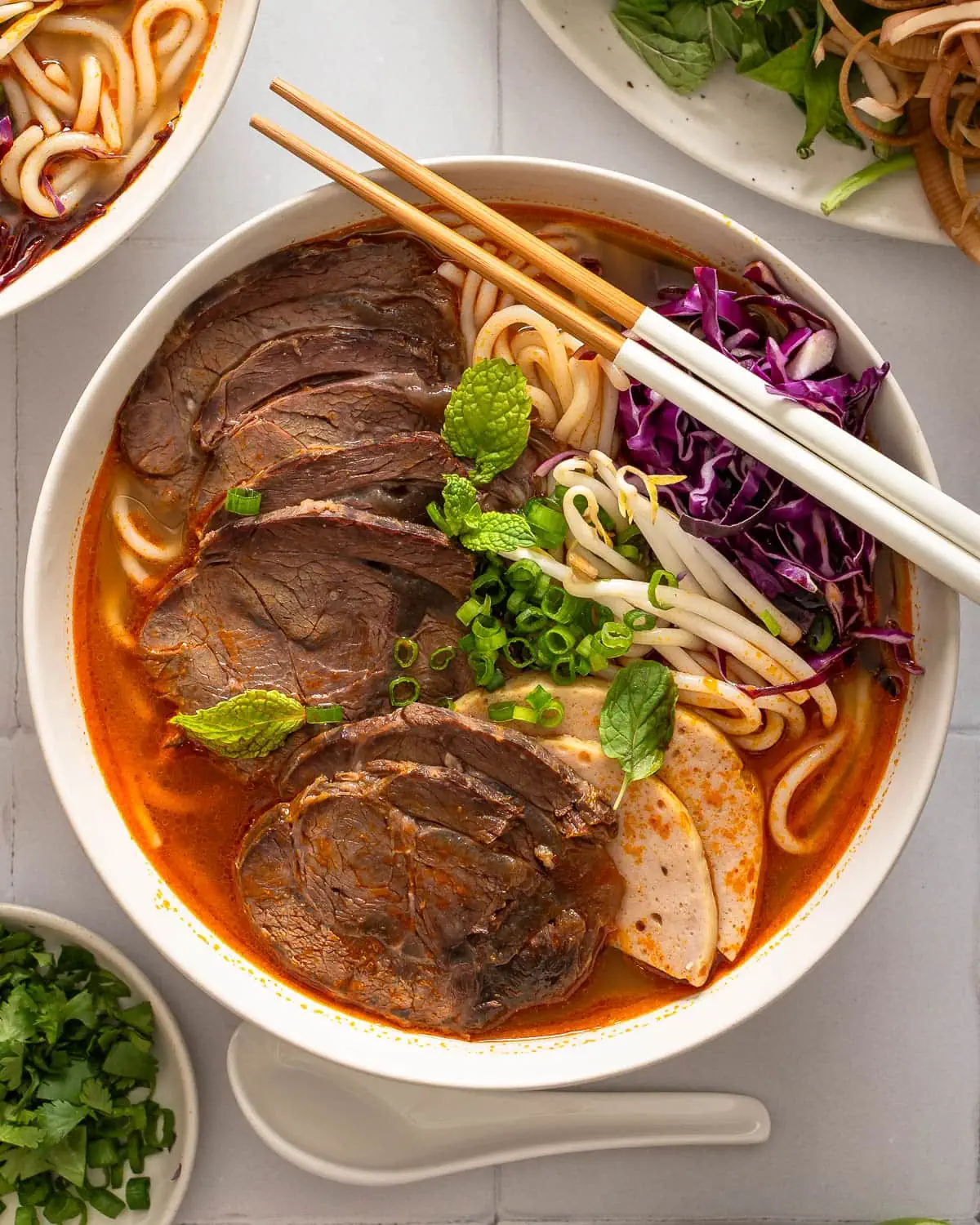
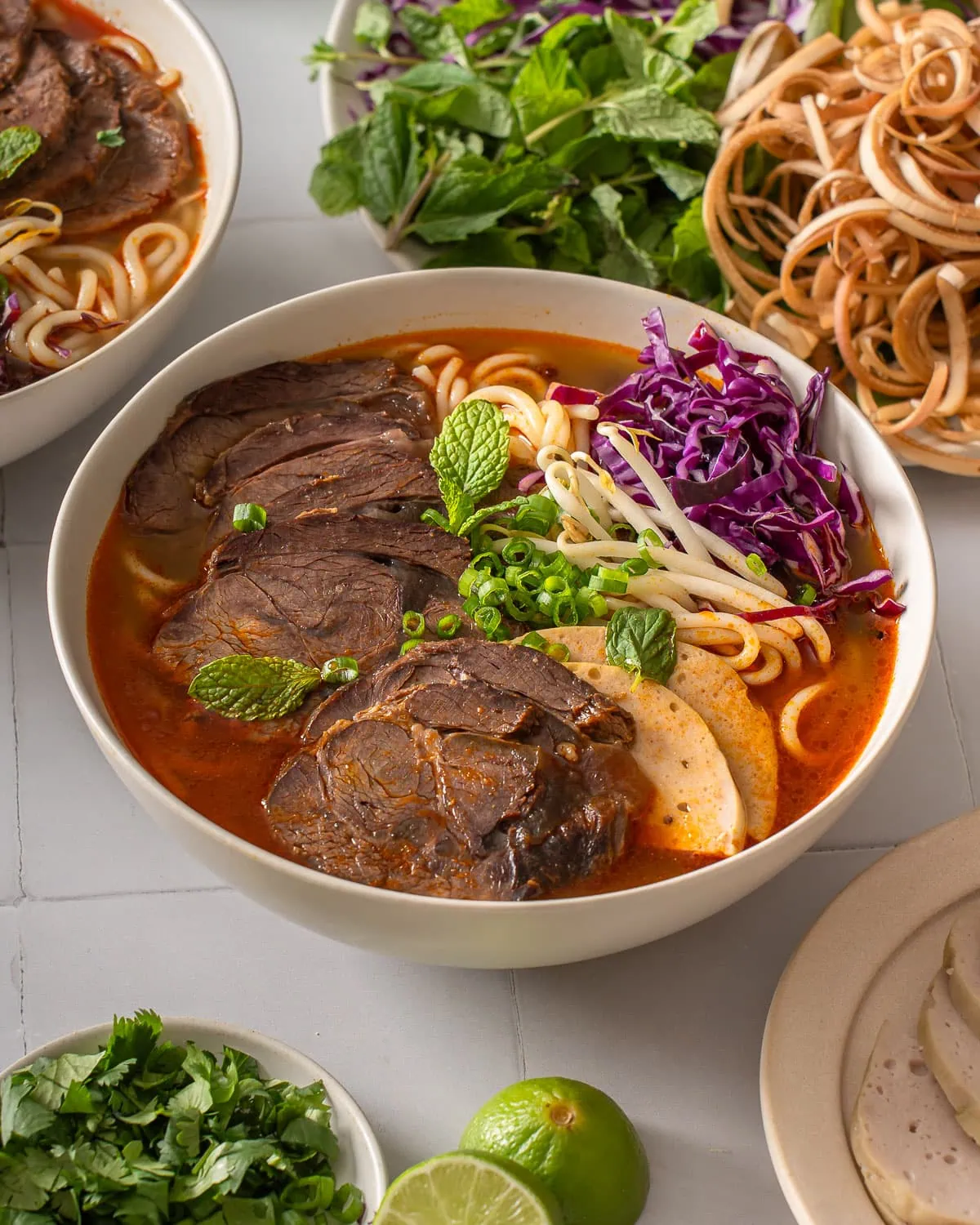
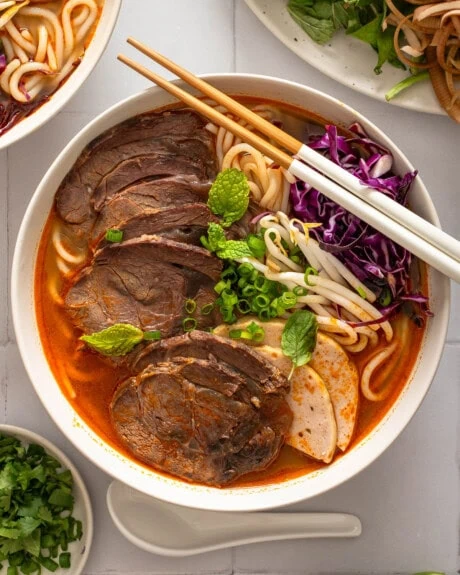
Spicy, aromatic spicy Vietnamese beef noodle soup is an underrated comforting soup. Bún bò Huế features slow cooked beef shank, pork hocks, a spicy sate sauce, thick rice noodles, and topped with fresh herbs and veggies.
This Post May Contain Affiliate Links. Please Read Our Disclosure Policy.
Bun bo Hue is one of the most delicious noodle soups that doesn’t get the spotlight it deserves. This is hands down my favorite Vietnamese dish. This bun bo Hue recipe is made with a deeply flavorful and aromatic broth made up of a combination of beef shank, pork hock, shrimp paste, onion, daikon, and a ton of lemongrass.
The best part about this Vietnamese beef noodle soup is that you can adjust the spice level based on your preferences with the sate sauce. Bun bo Hue may not be as popular as pho but that does not mean it is any less delicious.
Bún bò Huế translates to beef noodles from Huế in Vietnamese. This Vietnamese dish originated Huế region which is located in Central Vietnam. This city has a reputation for exclusively spicy foods. This fiery red, spicy beef soup’s hearty broth derives from both beef and pork broth, shrimp paste, and chili sate sauce.
Bun bo Hue can be served for lunch or dinner. A single serving typically contains thick rice noodles, tender slow-cooked beef, pork hock, cha lua, and fresh herbs and vegetables. Traditionally, Bún bò Huế contains cubes of coagulated pig blood, but I omitted that in this recipe because I am not a huge fan.
Ingredients
You can find all of these ingredients for this bun bo Hue recipe at your local Asian or Vietnamese grocery store.
Broth
Pork Hocks: is part of the leg right above the hoof. For best results, use 1-inch thick sliced pork hocks. If they are not sliced, you can ask the butcher to slice them for you.
Beef Shank: is part of the leg of the cow which is a naturally tough meat that takes time to break down but is incredibly flavorful and tender.
Chicken Broth and Water: chicken broth adds more flavor to the broth.
Shrimp paste: Shrimp paste is a must. It is VERY smelly and not appetizing at first glance. However, it is diluted and necessary for an authentic bún bò Huế flavor.
Palm sugar: adds a subtle natural caramel sweetness.
Yellow onion: adds a strong sweet flavor.
Lemongrass: is the key aromatic in this bun bo Hue recipe. Be sure to pound the lemongrass to release its natural flavors before adding to the broth.
Daikon: adds subtle sweetness and depth.
Salt: seasons the broth.
Chicken Bouillon Powder: adds a more concentrated savory flavor to the broth.
Fish Sauce: adds a rich umami finish.
Sate Chili Ingredients
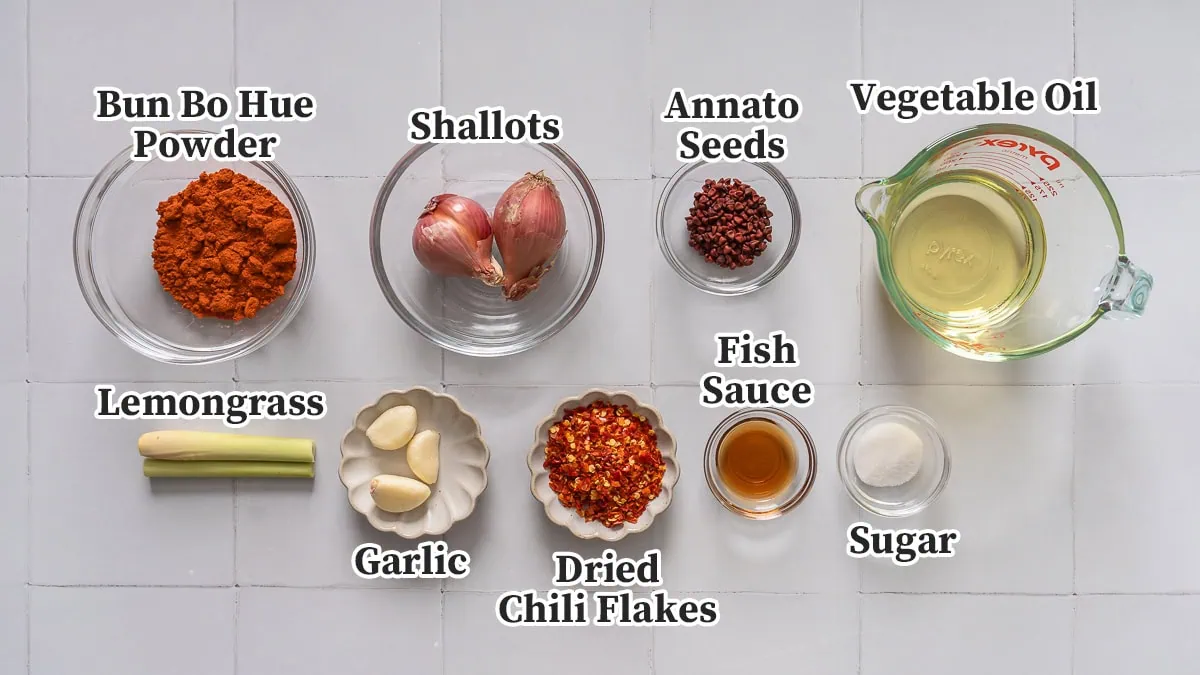
Vegetable Oil: is a neutral oil that has a high smoke point.
Annatto Seeds: gives the deep red color to bun bo Hue.
Dried Chili Flakes: are the key to creating spicy flavors.
Lemongrass, Garlic, and Shallots: add a rich aromatic blend to the sate chili sauce.
Bun Bo Hue Powder: a combination of spices such as paprika, garlic powder, onion powder, ginger powder, cloves powder, and star anise powder that adds a deep layer of warm spices.
Fish Sauce: adds savory umami flavor.
Sugar: sweetens the sate to balance the very spicy flavors.
Noodles, Garnishes, etc.
Thick Rice Noodles: are typically labeled Bun Bo Hue on the packaging. They are thick and chewy and soak up the soup.
Vietnamese Pork Sausage: cha lua or gio lua is a steamed ground pork meatloaf commonly used in Vietnamese cuisine. It adds more protein and flavor to the bowl.
Banana Blossom: this is a special vegetable that adds crunch and tanginess to this Vietnamese beef noodle soup. To prepare, see Expert Tips below.
Cilantro, Green onion, Vietnamese Coriander (Rau răm), Purple cabbage, Bean Sprouts, Mint, and Culantro: all add freshness and balance the deep savory flavors.
Lime: squeeze a wedge of lime in the broth before eating to add a touch of acidity to brighten the bun bo Hue broth.
Substitutions and Additions
Substitutions
Brisket: brisket is a good alternative to beef shank for a deep beef flavor.
Pork Shoulder: instead of pork hock, use pork shoulder
Water: instead of chicken broth, you can use water instead.
Sugar: instead of palm sugar, use granulated sugar, or rock sugar.
Neutral Oil: for the sate, use flavorless oils like canola, vegetable, and peanut oil.
Additions
Beef bones: adding beef bones like oxtail will provide a deeper and richer beef flavor.
Pork blood: coagulated pork blood is commonly served in this spicy beef soup.
Fried Tofu: add fried tofu for added texture and protein.
How to Make Bun Bo Hue
Here are the step-by-step photo instructions for this delicious bun bo Hue recipe. See below for full measurements and detailed instructions for this recipe.
Broth
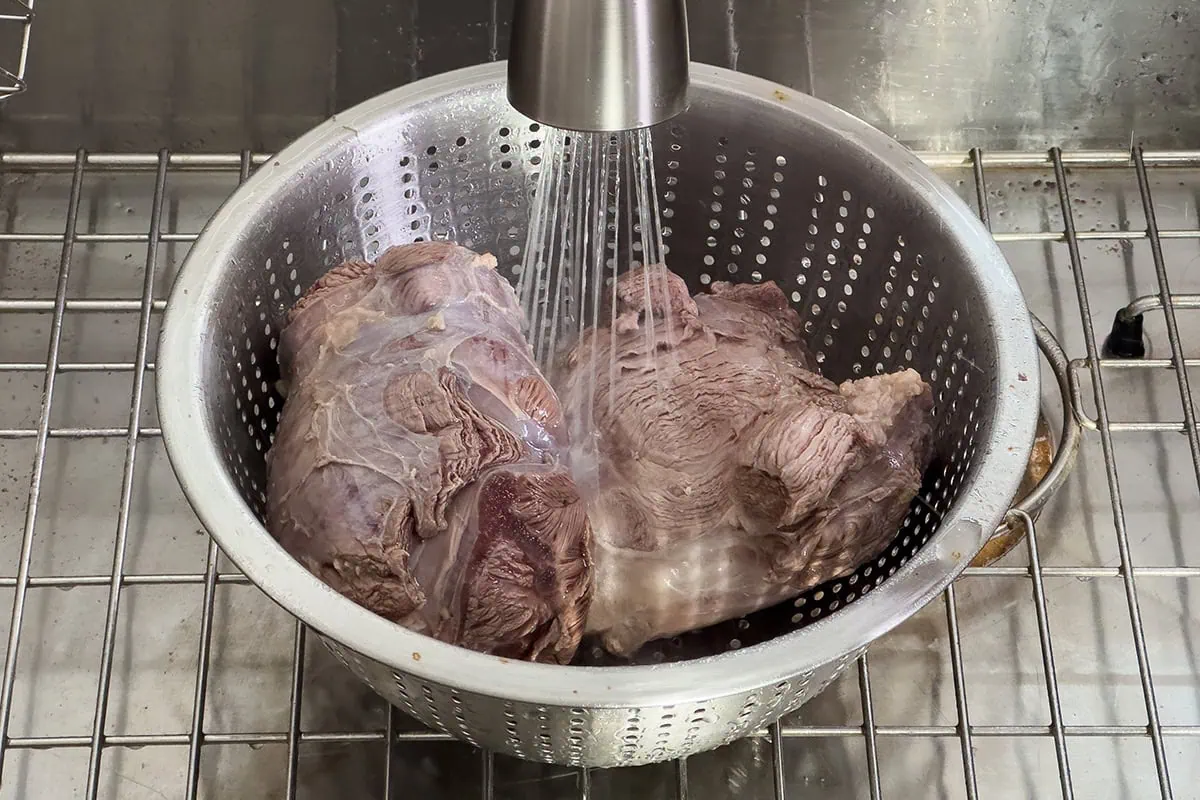
In a medium pot, add the beef shank, cover it with water, and bring the water to a boil and boil for 5 minutes. Then drain the pot and rinse the bones under running water.
In a separate medium pot, add the pork hocks, cover with water, bring the water to a boil, and boil for 5 minutes. Then drain the pot and rinse the bones under running water.
In a large pot, add the beef and pork hock and fill with 8 cups of chicken broth and 8 cups of water. Then add the halved onion, 4 stalks of bruised lemongrass, daikon, palm sugar, and salt. Bring to a boil over high heat. Then reduce the heat to medium-low, cover, and simmer for 90-100 minutes or until the pork is tender. Skim any extra scum that reaches the surface. Remove the pork hock and place it in an ice bath.
Mix the shrimp paste with 3/4 cup of water until combined. Let the shrimp paste sit for 10 minutes to settle. When the shrimp paste has separated, slowly pour the clearer diluted broth on top into the broth and discard the extra sediment that sinks to the bottom. After the 90 minutes add the shrimp paste.
Add the remaining 5 stalks of pounded lemongrass, chicken bouillon powder, and the remaining 8 cups of water into the pot. Simmer for 2 more hours.
After 2 hours, add the fish sauce. Then take everything out of the pot. Thinly slice the beef once it has cooled.
Sate Chili Sauce
In a medium skillet over medium heat, add the oil and the annatto seeds and stir until the oil turns a bright red color. Then strain and discard the annatto seeds.
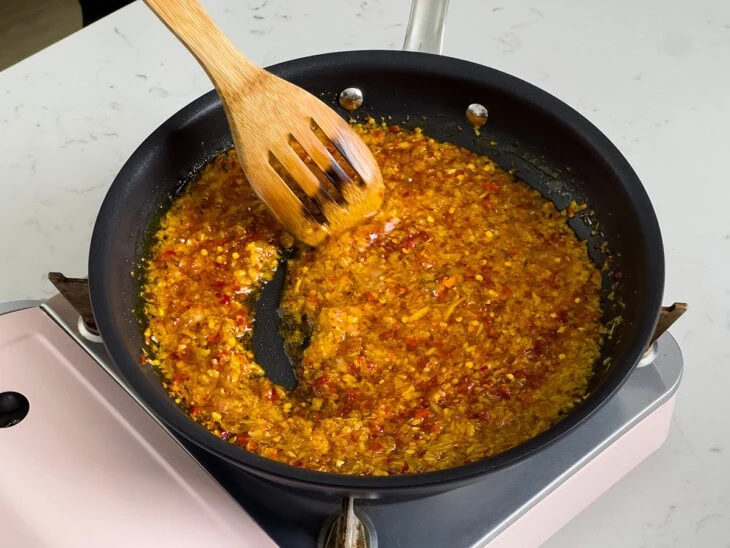
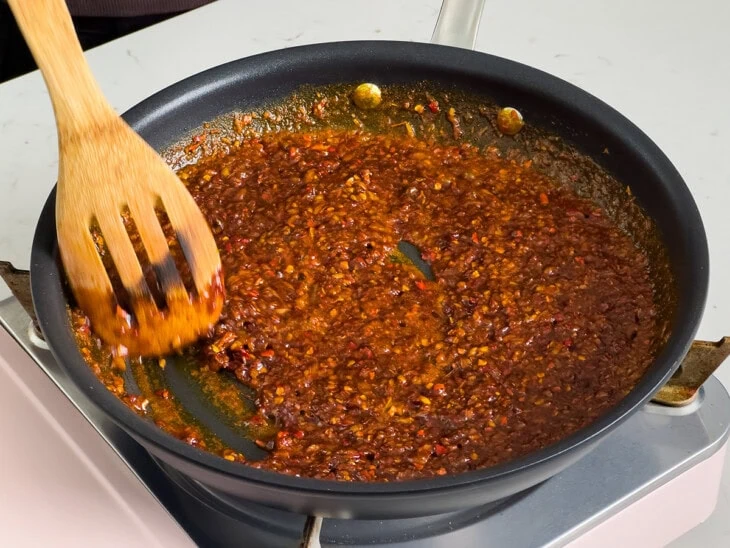
In the same skillet, add the anatto oil and heat over medium heat. Add the chili flakes, lemongrass, and garlic, and saute until fragrant. Then add the bun bo hue seasoning powder, fish sauce, and sugar and saute until thickened.
Season the broth with the sate sauce 1 tablespoon at a time to taste based on spice tolerance and simmer for 15 minutes. Add more sate sauce for a spicier broth.
Assemble
Boil and drain the rice noodles according to the instructions on the package.
In a soup bowl, add the round vermicelli noodles, top with sliced beef shank, pork hock, and cha lua, and ladle the broth in. Then serve the bun bo hue with a lime wedge, fresh herbs, and veggies.
Expert Tips
Skim the scum off of the bun bo Hue broth. Once the broth comes to a boil, there may be remaining scum that floats to the surface. Skim the scum for a cleaner-tasting broth.
Add water throughout the cooking. If you cannot fit all the water initially, you can periodically add the water as you simmer the beef and pork. The water will cook off over time.
Check the tenderness of the meat before removing it. The cooking times of the pork and beef may vary slightly depending on your stove. Make sure to taste and check the tenderness before removing.
Add sate sauce to taste. The spicy heat level of the soup will depend on how much sate sauce you add. So add the sate sauce 1 tablespoon at a time to taste based on your preferences.
How to prepare the banana flower. Remove the outer layer then thinly slice the banana bud and remove the seeds. Soak in cold saltwater for at least 10 minutes, and then wash thoroughly with clean water. Lay out to dry. This prevents the banana bud from turning brown.
Sift the broth before serving. Pour the soup through a fine mesh sieve for a clearer broth before serving
Storage
You can store the bun bo hue broth and the meat separate from the noodles in airtight containers in the refrigerator for up to 1 week. I recommend cooking the noodles the day you will serve the soup for the best texture.
Reheat: Pour the broth into a pot and heat on the stove over medium-high heat until it reaches a boil.
Freeze: You can freeze the broth with the meat in a freezer-safe container for up to 3 months. Defrost in the refrigerator overnight before reheating.
Pairing Suggestions
This spicy Vietnamese beef noodle soup pairs well with the following appetizers and desserts for a full three-course meal.
YES! The level of spice in your bowl of bun bo Hue ultimately depends on how much sate chili you add to the broth. You can always skim the top red layer to make the broth less spicy if you accidentally add too much sate sauce.
What is the difference between bún bò Huế and phở?
There are quite a few differences between these two Vietnamese noodle soups. First, pho noodles are typically flat whereas bun bo Hue uses thick round noodles. Second, pho can be made into an all-beef or all-chicken type of soup, whereas bun bo Hue uses a mixture of pork and beef with a kick of shrimp paste. Third, pho is typically served as a mild soup with no added spiciness whereas bun Bo Hue is known to be a spicy soup.
Does Bun Bo Hue have pork?
Yes! This spicy Vietnamese beef noodle soup also contains pork hock as well.
How do you serve this soup?
You can serve bún bò Huế alongside a plate of fresh herbs and veggies which includes but is not limited to cilantro, green onion, banana blossom, bean sprouts, Vietnamese coriander, culantro, mint, cabbage, and limes.
Spicy, aromatic spicy Vietnamese beef noodle soup is an underrated comforting soup. Bún bò Huế features slow-cooked beef, pork, a spicy sate sauce, thick rice noodles, and topped with fresh herbs and veggies.
Parboil the beef. In a medium pot, add the beef shank, cover with water, bring the water to a boil, and boil for 5 minutes. Then drain the pot and rinse the bones under running water to clean the meat of impurities.
Parboil the pork. In a separate medium pot, add the pork hocks, cover with water, bring the water to a boil, and boil for 5 minutes. Then drain the pot and rinse the bones under running water to clean the meat of impurities. Using a separate pot will preserve the original flavor of the pork.
Cook the broth. In a large stockpot, add the beef and pork hock and fill with 8 cups of chicken broth and 8 cups of water. Then add the halved onion, 4 stalks of bruised lemongrass, daikon, palm sugar, and salt. Bring to a boil over high heat. Then reduce the heat to medium-low, cover, and simmer for 90-100 minutes or until the pork is tender. Skim any extra scum that reaches the surface. Remove the pork hock and place it in an ice bath.
Dissolve the shrimp paste. Mix the shrimp paste with 3/4 cup of water until combined. Let the shrimp paste sit for 10 minutes to settle. When the shrimp paste has separated, slowly pour the clearer diluted broth on top into the broth and discard the extra sediment that sinks to the bottom. After the broth has cooked for 90 minutes, add the shrimp paste.
Add lemongrass, chicken bouillon, and water. Add the remaining 5 stalks of pounded lemongrass, and chicken bouillon powder, and the remaining 8 cups of water into the pot. Simmer for 2 more hours.
Remove and add fish sauce. After 2 hours, finish by adding fish sauce. Taste one piece of the beef to see if it is soft and tender. If not, continue cooking until tender. Then take everything out of the pot. Thinly slice the beef once it has cooled.
Sate Chili Sauce
Make annatto oil. In a medium skillet over medium heat, add the oil and the annatto seeds and stir for 45 seconds or until the oil turns a bright red color. Then strain and discard the annatto seeds.
Make the sate. In the same skillet, add the anatto oil and heat over medium heat. Add the chili flakes, lemongrass, garlic, and saute until fragrant. Then add the bun bo hue seasoning powder, fish sauce and sugar and saute for 2 minutes until thickened.
Season the stock. Season the broth with the sate sauce 1 tablespoon at a time to taste based on spice tolerance and simmer for 15 minutes. Add more sate sauce for a spicier broth.
Assemble
Cook the noodles. Boil and drain the rice noodles according to the instructions on the package. Then place the noodles in a soup bowl.
Assemble. In a soup bowl, add the round vermicelli noodles, top with sliced beef shank, pork hock, and cha lua, and ladle the broth in. Then serve with a lime wedge, fresh herbs, and veggies. Enjoy! For a clearer broth, strain the soup through a fine mesh sieve before serving.
Notes
See the above Expert Tips section for more guidance.












Rate & Review What did you think of this recipe?