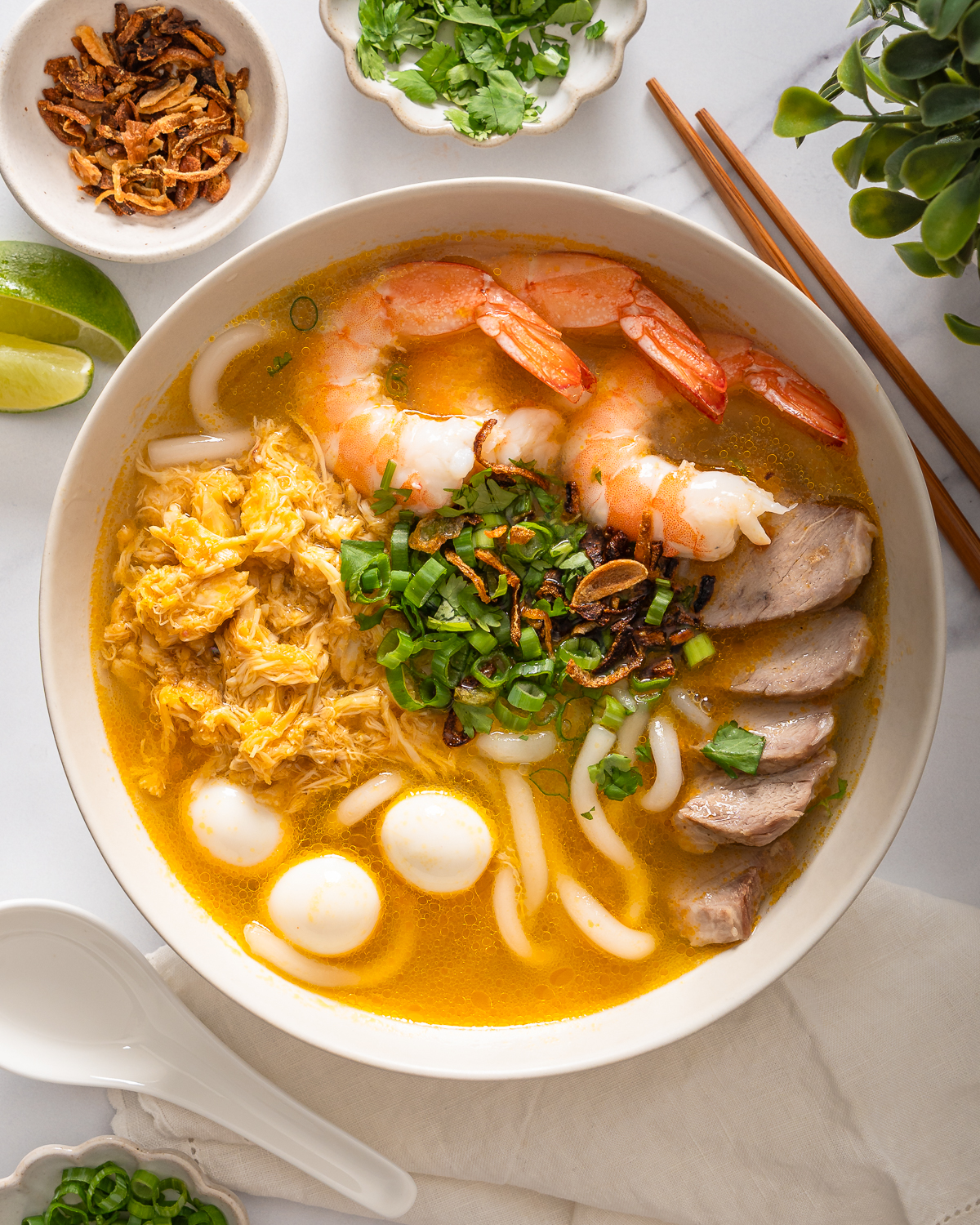
This comforting banh canh cua recipe features thick, chewy tapioca noodles in a rich, savory pork-and-seafood broth, topped with tender shrimp, fresh crab meat, herbs, and crispy fried shallots.
This comforting banh canh cua recipe features thick, chewy tapioca noodles in a rich, savory pork-and-seafood broth, topped with tender shrimp, fresh crab meat, herbs, and crispy fried shallots.
This Post May Contain Affiliate Links. Please Read Our Disclosure Policy.
Growing up, my mom would make a huge pot of banh canh cua (Vietnamese crab noodle soup) for me and my cousins to heat up for lunch when she was at work. This is one of those comforting childhood meals we still reminisce about today. This soup is easy to make and is bursting with rich, savory seafood flavor
This Vietnamese crab noodle soup recipe was passed down from my mom and includes everything I loved growing up. The thick, chewy tapioca noodles, aka banh canh, float effortlessly in a rich, thickened pork and seafood broth that’s topped with shrimp, sautéed crab meat, and a handful of herbs and fried shallots. Every bite is cozy, savory, and incredibly satisfying.
You can find all the ingredients for this banh canh cua recipe at your local Vietnamese or Asian grocery market. Full measurements and links to everything I used are in the recipe card below.
For the Broth
Pork Bones and Belly: I use a variety of pork bones such as pork neck and spare ribs to create a rich, savory broth. I also include pork belly for extra protein to serve with my bowl.
Shrimp: I recommend using shell-on shrimp with the heads because cooking them in the broth adds an extra layer of seafood flavor.
Dried Shrimp: Adds concentrated shrimp seafood flavor. You can also use dried squid as well.
Yellow Onion: gives the broth a subtle aromatic sweetness.
Daikon: adds more natural sweetness and balances the richness of the pork.
Salt and Sugar: to balance the flavors of the broth.
Chicken Bouillon Powder: enhances the savory nature of the broth.
Fish Sauce: I always add fish sauce to all my Vietnamese noodle soups for a burst of umami flavor.
Annatto Seed Oil: gives the broth its signature reddish-orange color.
For the Crab
Crab Meat: I always use fresh lump crab meat that I find pre-cooked in a tub in the refrigerated aisle at Costco. Fresh, refrigerated, or canned crab meat can also work as well. I also use this crab in my crab fried rice (khao pad pu).
Garlic and Shallot: Add fragrant, aromatic flavors to the crab.
Annatto Seed Oil: for added vibrant orange color. Paprika can also work here as well.
Fish Sauce and Sugar: to season the crab.
For the Bowl
Banh Canh Noodles: aka tapioca starch noodles that are thick, chewy and bouncy. They are labeled banh canh on the packaging. If you cannot find these noodles fresh udon noodles are a good substitute.
Quail Eggs: For added garnish, and to make the soup more filling.
Green Onions, cilantro, culantro: for added freshness.
Fried Shallots: adds a savory crisp texture and flavor.
Lime: for added brightness.
How to Make
Here are the step-by-step instructions with photos for how to make this banh canh cua recipe.
In a large pot, cover the pork with water and 2 tablespoons of salt. Bring to a boil and boil for 5 minutes. Then drain and thoroughly rinse the pork.
In a large pot, add the pork, dried shrimp, onion, daikon, and 6 quarts of water. Bring to a boil, then reduce to a simmer. Cover and simmer for 1 hour, and occasionally skim off any foam or impurities. Then remove everything but save the pork.
Add the shell on shrimp into the broth for 2-3 minutes or until done. Then remove and peel.
Add the salt, sugar, chicken bouillon powder, fish sauce and annatto seed oil. Mix until combine.
Combine the tapioca starch and water in a small bowl and add the slurry into the broth. Mix until the broth is thickened.
In a pan, heat annatto oil over medium high heat. Then add the shallot and garlic for 30 seconds. Toss in the crab and combine for 2 minutes. Remove and set aside.
Boil the noodles according to the package instructions.
In a bowl, add noodles, pork, shrimp, crab and broth. Top with chopped herbs, a squeeze of lime and fried shallots. Enjoy!
What I Learned Testing This Recipe
Always parboil the pork. Parboiling the pork and rinsing it before creating the broth will help remove a lot of impurities and create a clean clear broth.
Cook the shrimp in the broth. This will add a natural sweetness to the broth and another layer of seafood flavor. Be sure to remove them as soon as they are cooked.
Annatto oil is optional. This gives the broth and the crab the signature orange-red color. It does not have much flavor to it.
Use Paprika for more color. I like to sprinkle a few dashes of paprika on my crab for more red-orange coloring.
How to make Annatto Oil: In a small saucepan, heat 1/2 cup oil with 2 tablespoons annatto seeds over medium-low heat until the oil turns bright red, about 5-10 minutes.
Add more tapioca slurry if needed. If you like a thicker broth, add more tapioca slurry, 1 tablespoon at a time, until you reach your desired thickness.
What to serve with
Banh canh cua can be served on its own as a complete meal, topped with fresh herbs, fried shallots, and a squeeze of lime.
Store any leftover banh canh cua in an airtight container in the refrigerator for up to 3 days. I recommend storing the broth separately from the proteins and cooking fresh noodles when you are ready to serve.
Reheat: Add the cooked pork, crab, and shrimp to the soup in a small pot over medium-high heat and bring to a boil or soft simmer. The noodles will dry out in the refrigerator over time. I recommend blanching them before serving as well.
Freeze: You can freeze the broth once it has cooled to room temperature, separately from the noodles, pork, crab, and shrimp, in a freezer-safe container for up to 3 months. Thaw in the refrigerator overnight before reheating.
This homemade banh canh cua is my favorite Vietnamese comfort food, made with a slow-simmered, aromatic pork broth and topped with a generous amount of crab and shrimp. Finish it with a handful of chopped herbs, fried shallots, and a squeeze of lime for that extra freshness.
Ingredients
Servings: 6servings
For the Broth
6lbspork bonesa combination of pork neck, pork belly, or spare ribs
Parboil Pork. In a large pot, cover the pork bones and pork belly with water and 2 tablespoons of salt. Bring to a boil and boil for 5 minutes. Then strain and rinse the pork thoroughly.
Cook the broth. In a large pot, add the parboiled pork, dried shrimp, large onion, daikon, and 6 quarts of water. Bring to a boil and then lower to a simmer. Simmer covered for 1 hour. Skim the scum off the top. Then remove the pork, dried shrimp, onion, and daikon. Save the pork and discard the dried shrimp, onion, and daikon.
Cook the shrimp. Add the shrimp and cook for 2-3 minutes, until pink and done. Remove and set aside. Peel when cooled.
Season the broth. Once the soup has simmered, add the salt, sugar, chicken bouillon powder, fish sauce, and annatto seed oil. Taste and adjust the seasoning as needed.
Thicken the broth. In a small bowl, mix the tapioca starch and water until completely dissolved. Then add the slurry to the broth while stirring, and simmer for 5 minutes to thicken.
Cook the crab meat. In a pan, heat 2 tablespoons of annatto oil until hot, then sauté the shallot and garlic until fragrant, about 30 seconds. Then add the crab and toss until cooked, about 2 minutes. Remove and set aside.
Cook the noodles. Bring a pot of water to a boil, then cook the noodles according to the package instructions.
Assemble. In a bowl, add the noodles, shrimp, pork ribs, and crab meat. Ladle in the broth and top with green onion, cilantro, culantro, and fried shallots. Serve with a fresh lime wedge and enjoy!
Notes
See the What I Learned Testing This Recipe section for more guidance.







Rate & Review What did you think of this recipe?