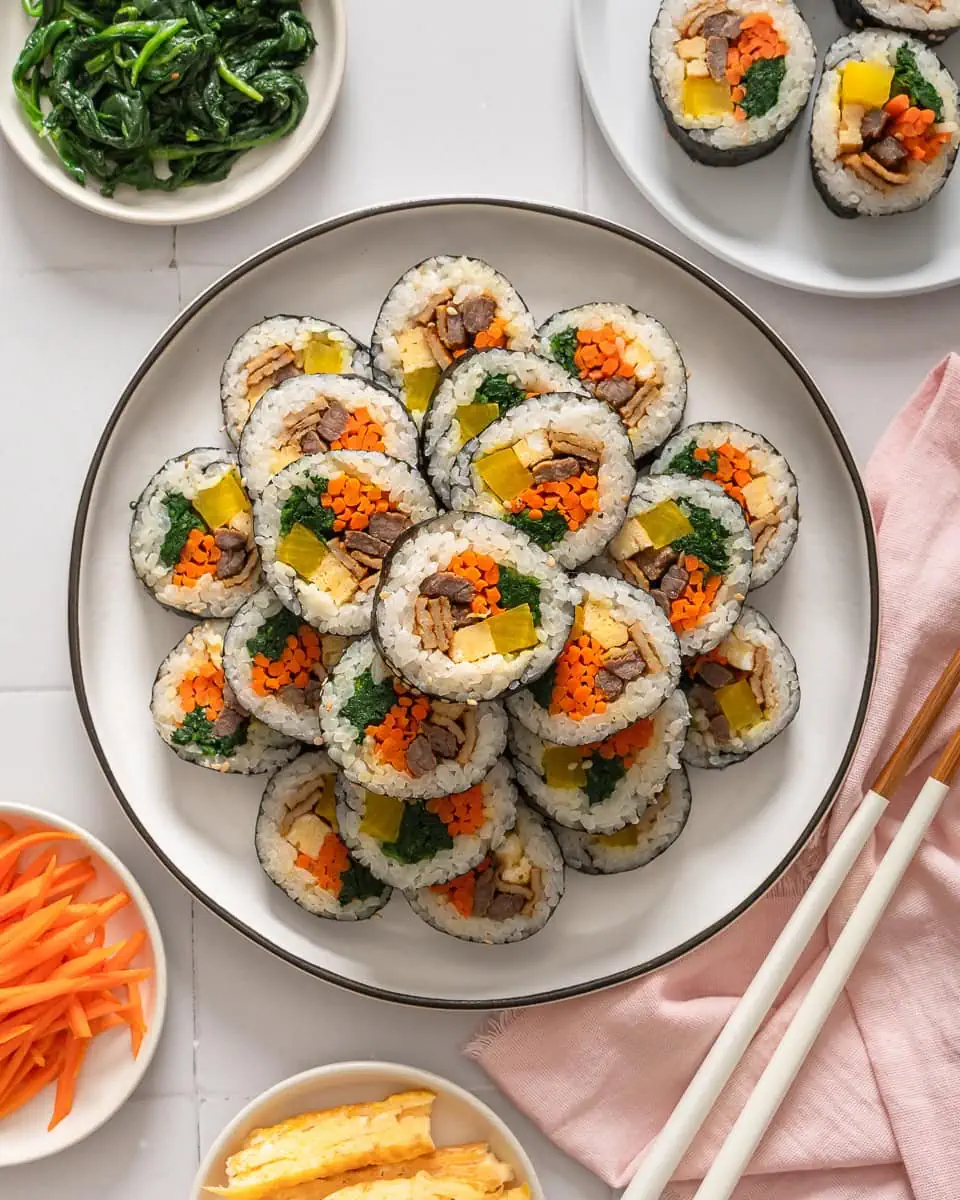
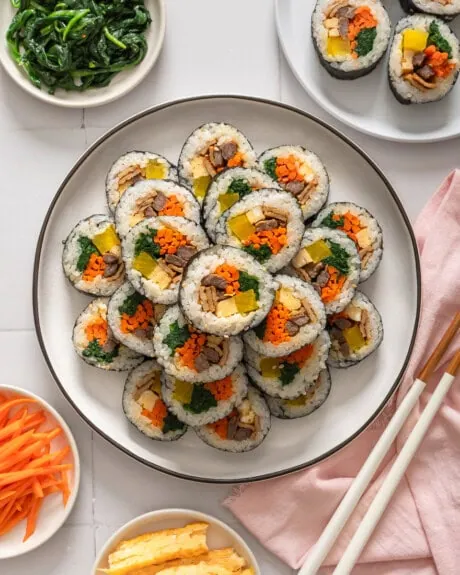
Tender marinated beef, seasoned fish cake, eggs, spinach, carrots, pickled radish, and plump short-grain white rice, all wrapped in a crisp seaweed sheet. Kimbap has the perfect balance of umami flavors, vibrant nutrients, and textures all in one bite.
Tender marinated beef, seasoned fish cake, eggs, spinach, carrots, pickled radish, and plump short-grain white rice, all wrapped in a crisp seaweed sheet. Kimbap has the perfect balance of umami flavors, vibrant nutrients, and textures all in one bite.
This Post May Contain Affiliate Links. Please Read Our Disclosure Policy.
This is your sign to make kimbap at home! It may look complicated, but it is actually a lot easier than you think. These Korean seaweed rice rolls are beautifully vibrant in color, from the various protein and vegetable fillings, and perfectly balanced in terms of savory flavors and textures.
This easy kimbap recipe is the perfect dish to make for your next lunch or as a snack! Plus, you can easily customize the fillings with a wide selection of substitutions, listed below.
Kimbap, also known as gimbap, is a popular Korean dish made with short-grain rice (bap), tender, marinated beef, blanched spinach, eggs, sautéed carrots, pickled radish, and fish cake wrapped in a crisp, roasted seaweed sheet (gim). It is often made with a variety of different combinations of textures and flavors.
Kimbap is typically served for lunch and is a popular grab-and-go snack found in Korean convenience stores. Visually, gimbap resembles a sushi roll, but the ingredients are cooked and seasoned with Korean flavors, such as sesame oil and salt.
Ingredients
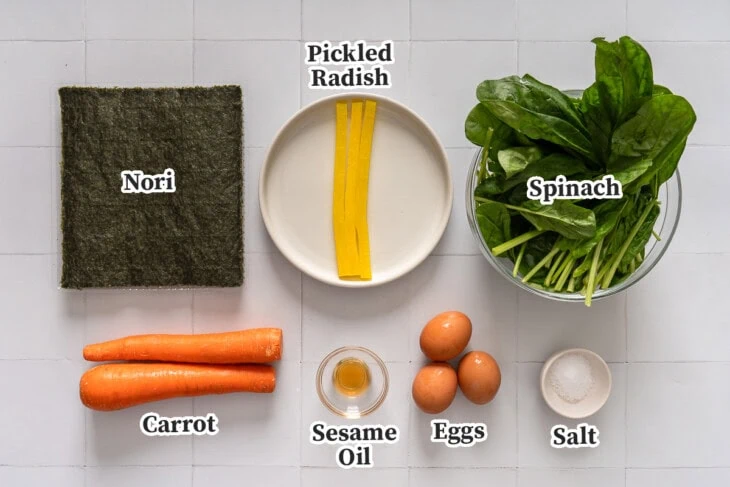
You can find all of the ingredients for this kimbap recipe at your local Asian grocery store. Full measurements and links to the ingredients I used are listed in the recipe card below.
Rice
Short or Medium Grain Rice: Korean short or medium grain rice is ideal because it is lightly sticky, which allows the rice to stick together and prevents the roll from falling apart. This rice is the same as sushi rice; the only difference is the addition of seasonings.
Sesame Oil and Salt: to season the rice.
Beef
Beef: Thinly sliced ribeye or sirloin works best because these cuts absorb the marinade well, are tender and juicy, and cook quickly. You can also substitute this beef with beef bulgogi.
Soy Sauce: adds a savory, salty, umami base to the marinade.
Mirin: or rice wine that adds a mild sweetness and balanced acidity.
Sugar: gently sweetens the marinade.
Sesame Oil: adds a nutty, umami flavor.
Garlic: adds a rich aromatic garlic flavor.
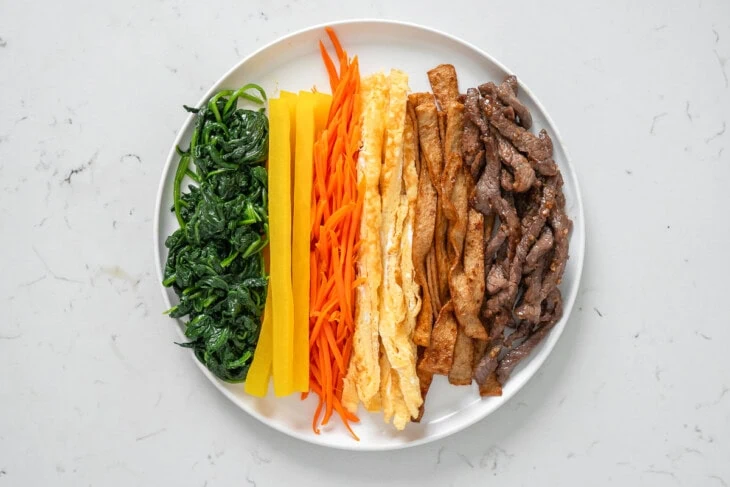
Fillings
Spinach: lightly blanched and seasoned for added vegetables.
Carrots: add a soft crunch and sweetness.
Danmuji (Pickled Radish): is a Korean pickled radish that is bright yellow, and is typically already pre-cut for gimbap. It adds a sweet-tangy taste and a crisp, crunchy texture.
Eggs: for added protein and texture.
Nori (Roasted Seaweed Sheets): to wrap the kimbap together. I use Korean seaweed sheets that are labeled for kimbap or gimbap because they are slightly larger.
Fish cake: adds extra protein and a savory, salty, sweet flavor to the kimbap roll.
Soy Sauce: adds umami savory flavors in the soy sauce.
Sugar: to add a touch of sweetness to the fish cake.
Sesame Oil and salt: for added seasoning.
Substitutions and Additions
Proteins: spam, ham, imitation crab, fried tofu, tuna, shrimp tempura, or fried chicken.
Here are the step-by-step instructions for how to make this kimbap recipe.
Cook the white rice in a rice cooker or on the stove. Once the rice is cooked, add the sesame oil and salt and mix until combined.
In a small mixing bowl, mix the beef, soy sauce, mirin, sugar, sesame oil, and garlic. Marinate for 15 minutes.
Bring a pot of water to a boil and blanch the spinach for 30 seconds. Place the spinach in cold water and squeeze out all the water. Then season with sesame oil and salt.
In a medium pan over medium-high heat, add one teaspoon of sesame oil and saute the carrots with 1/8 teaspoon of salt for 1 minute.
Whisk the eggs with 1/4 teaspoon of salt. Heat 1 tablespoon of oil in a medium pan over medium-high heat. Add the eggs and cook until the bottom is 60% set. Then fold the eggs about 2 inches, fold again, and remove when done. Slice into 1/4 inch strips.
In the same pan, heat one teaspoon of oil over medium-high heat. Mix the fish cake, soy sauce, sugar, and sesame oil, and saute for 2 minutes.
In the same pan, heat one tablespoon of oil over medium-high heat, and stir-fry the beef for about 2-3 minutes.
Assemble
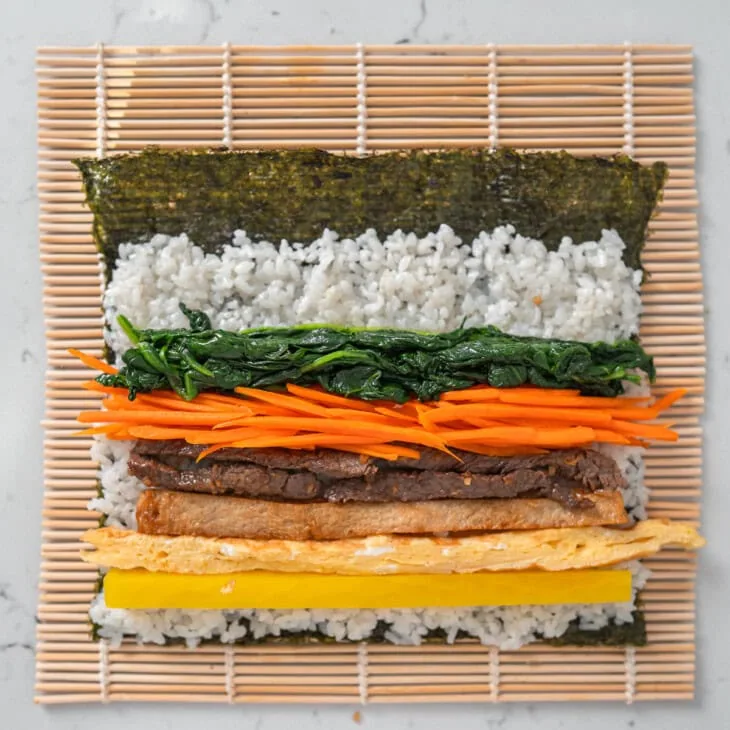
Place the seaweed sheet with the shiny side down and the longer side facing you on a bamboo sushi mat. Start on one side and spread a thin layer of 3/4 cup of rice evenly over the seaweed, leaving a 1 1/2-inch gap at the top.
Lay an even amount of each filling in the center of the rice, leaving about 1 inch of rice at the top.
Lift the entire bottom edge of the rice with both hands and tuck the filling in with your fingers as you roll while applying a firm amount of pressure.
Brush the kimbap roll lightly with sesame oil and slice it into 1/2-inch-thick slices.
Expert Tips
Use warm, not hot rice. Cooled, warm rice will prevent the seaweed from getting too soggy and ripping.
Do not overfill the roll. Use an even amount of each filling in the roll and avoid overfilling to prevent the roll from ripping.
Use firm pressure. When you roll the gimbap, use firm pressure to seal the rice onto the fillings and hold everything together.
Seal the roll with rice. Place a grain of rice at the edge of the seaweed so it sticks together and stays closed.
Clean the knife between slices. For clean, even pieces, clean the knife with a damp towel in between each cut.
Storage Instructions
Kimbap is best served immediately. But if you have any leftovers, wrap each roll tightly with plastic wrap and place the kimbap rolls in an airtight container for up to 1-2 days. The rice will firm up in the refrigerator.
Reheat: Cover the kimbap with a damp paper towel and microwave for 10-20 seconds at a time until warmed.
Pairing Suggestions
Kimbap can be served for lunch or as a snack on its own or with the following pairing suggestions.
Korean short or medium grain rice is best because it is naturally sticky, slightly chewy, and perfect for rolling and staying together.
Why is my kimbap falling apart?
There may be several reasons, such as the rice being too dry, the roll being overfilled, the fillings being too wet and moist, the seaweed sheet being too soggy from hot rice, or the roll not being rolled tightly enough with sufficient pressure.
What is the trick to getting clean, even slices?
For clean, even gimbap slices, use a freshly sharpened knife or sushi knife and clean it with a damp towel between slices. Use a gentle sawing motion for each cut.
Tender marinated beef, seasoned fish cake, eggs, spinach, carrots, pickled radish, and plump short-grain white rice, all wrapped in a crisp seaweed sheet. Kimbap has the perfect balance of umami flavors, vibrant nutrients, and textures all in one bite.
Cook the rice. Wash the rice 2-3 times or until the water is mostly clear. Add the water, and follow your rice cooker’s manual instructions for cooking. Alternatively, cook the rice on the stove.
Season the rice. Once the rice is cooked, add the sesame oil and salt and mix until combined. Set aside.
Fillings
Marinate the beef. In a small mixing bowl, add the beef, soy sauce, mirin, sugar, sesame oil, and garlic. Mix until combined and marinate for 15 minutes.
Prepare the spinach. Bring a pot of water to a boil and quickly blanch the spinach for 30 seconds. Place the spinach in cold water and squeeze out all the water. Then season with sesame oil and salt. Set aside.
Sauté the carrots. In a medium pan over medium-high heat, add one teaspoon of sesame oil and saute the carrots with 1/8 teaspoon of salt until tender, about 1 minute. Remove and set aside.
Prepare the eggs. Whisk the eggs with 1/4 teaspoon of salt until combined. Heat 1 tablespoon of oil in a medium pan over medium-high heat. Add the eggs and cook until the bottom is 60% set. Then fold the eggs about 2 inches, fold again, and remove when done. Slice into 1/4 inch strips. Set aside.
Sauté the fish cake. In the same pan, heat 1 teaspoon of oil over medium-high heat. Add the fish cake, soy sauce, sugar, and sesame oil and mix until softened, about 2 minutes.
Cook the beef. In the same pan, heat 1 tablespoon of oil over medium-high heat, stir-fry the beef until cooked through, about 2-3 minutes. Remove and set aside.
Assemble
Add the rice. Place the seaweed sheet with the shiny side down and the longer side facing you on a bamboo sushi mat lined with plastic wrap. Start on one side and spread a thin layer of 3/4 cup of rice evenly over the seaweed, leaving a 1 1/2-to 2-inch gap at the top.
Add the filling. Lay an even amount of each filling in the center of the rice, leaving about 1 inch of rice at the top to seal the filling.
Roll. Lift the entire bottom edge of the rice with both hands and tuck the filling in with your fingers as you roll while applying a firm amount of pressure. Once the roll is completely rolled, apply pressure to squeeze everything together.
Slice. Brush the roll lightly with sesame oil and slice it into 1/2-inch-thick slices. Wipe the knife with a damp towel between cuts to ensure clean cuts.












Rate & Review What did you think of this recipe?