Let’s make sushi at home! This detailed guide on how to make sushi rice offers the perfect seasoning ratio and all the essential tips to make the best rice for your favorite sushi recipe.
Let’s make sushi at home! This detailed guide on how to make sushi rice offers the perfect seasoning ratio and all the essential tips to make the best rice for your favorite sushi recipe.
This Post May Contain Affiliate Links. Please Read Our Disclosure Policy.
Every great sushi recipe starts with a perfectly seasoned sushi rice. Sushi rice is incredibly easy to make with only five ingredients! This Japaneserice recipe is made with short-grain sushi rice that is seasoned with rice vinegar, sugar, and salt, resulting in a tangy, sweet, and savory bite.
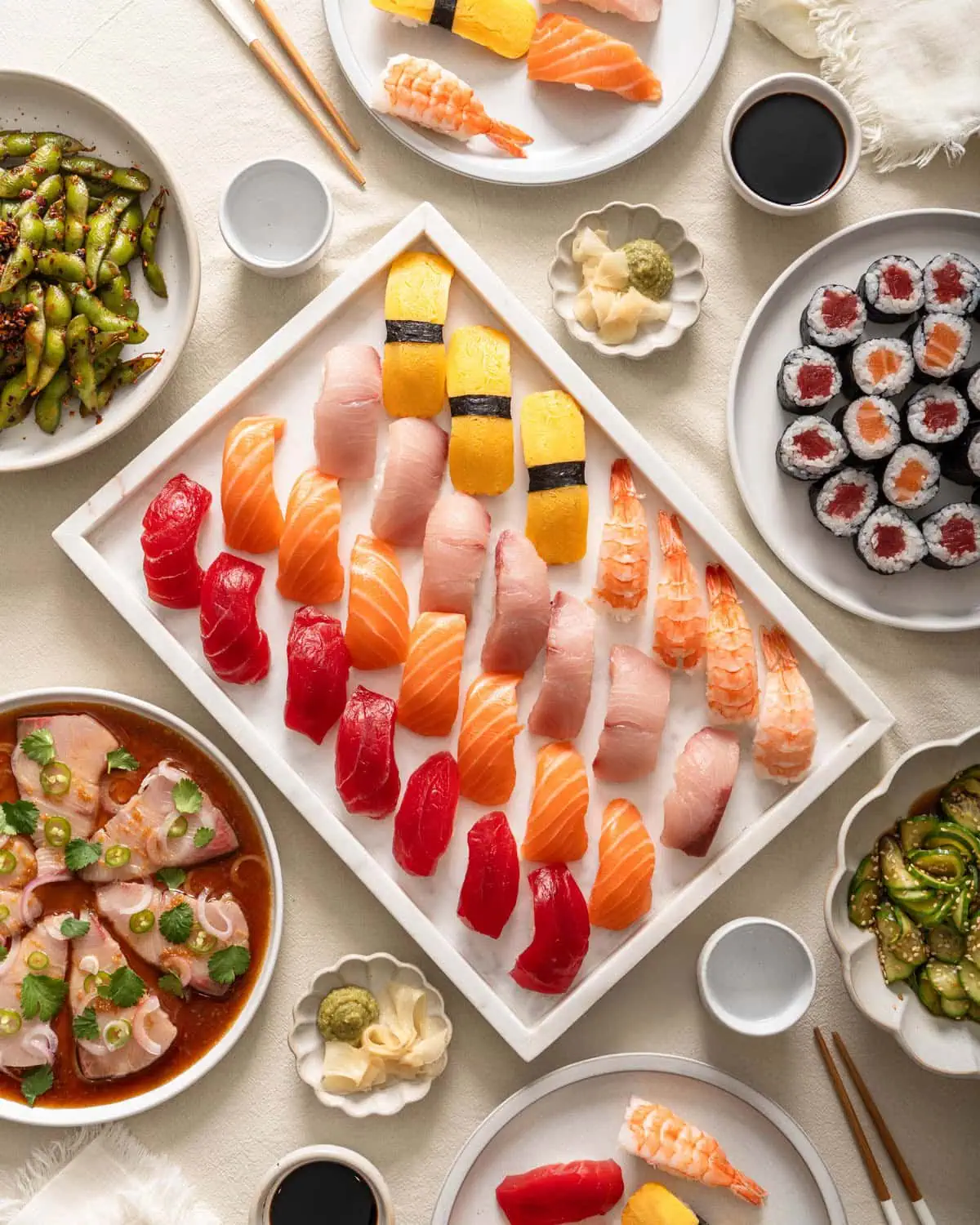
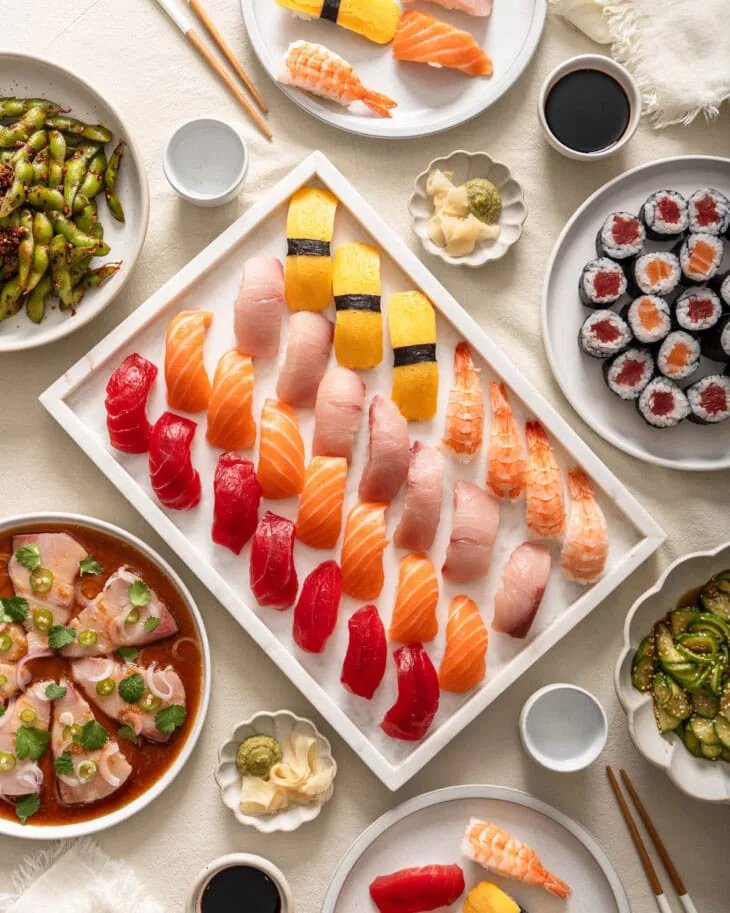
Sushi rice is incredibly versatile, making it suitable for a wide range of dishes, including your favorite sushi recipes, poke bowls, onigiri, sushi bakes, and more. For a full, comprehensive guide to creating a sushi party at home with all my sushi recipes, check out my How to Make Sushi at Home guide.
Sushi rice is a seasoned Japanese rice made with Japanese short-grain rice that has a higher starch content and a soft, sticky texture perfect for all types of sushi. The short-grain rice is seasoned with a mixture called sushi-su, which is made with rice vinegar, sugar, and salt.
Sushi rice is most commonly used in nigiri, maki (sushi rolls), chirashi bowls, and hand rolls. For example, sushi rice is used in my recipe for kani sushi (spicy crab roll).
Ingredients
Short Grain Sushi Rice: short grain Japanese rice is the best type of rice to use for sushi. It has a sticky and firm texture that is perfect for holding its shape and sticking together. Sushi rice is most commonly used to make sushi like unagi sushi or tekka maki (tuna sushi roll).
Kombu: adds a briny, umami rich, oceanic aroma to the rice. Kombu is an optional ingredient that could add a little flair.
Unseasoned Rice Vinegar: has a mild, delicate and slightly sweet flavor that is less sharp than other vinegars.
Sugar: to balance and sweeten the tangy acidic flavor of the vinegar.
Salt: to season the rice.
Substitutions and Additions
Substitutions
Vinegar: apple cider vinegar, white wine vinegar, champagne vinegar or mirin can be used as alternatives however you may need to adjust the sugar or salt levels accordingly.
Sugar: honey, mirin or agave syrup.
Additions
Furikake seasoning: for added flavors and textures.
Sesame seeds: for a crunch.
Togarashi: for added heat.
How to Make Sushi Rice
Here are the step-by-step instructions for how to make sushi rice.
Measure the rice with a regular measuring cup.
Wash the rice 2-3 times with your hand until the water turns almost clear, then drain.
Add water and kombu and cook the rice in a rice cooker. For stovetop instructions see the recipe card.
In a small pot over medium heat, combine the rice vinegar, sugar, and salt and bring to a gentle simmer. Then remove from heat.
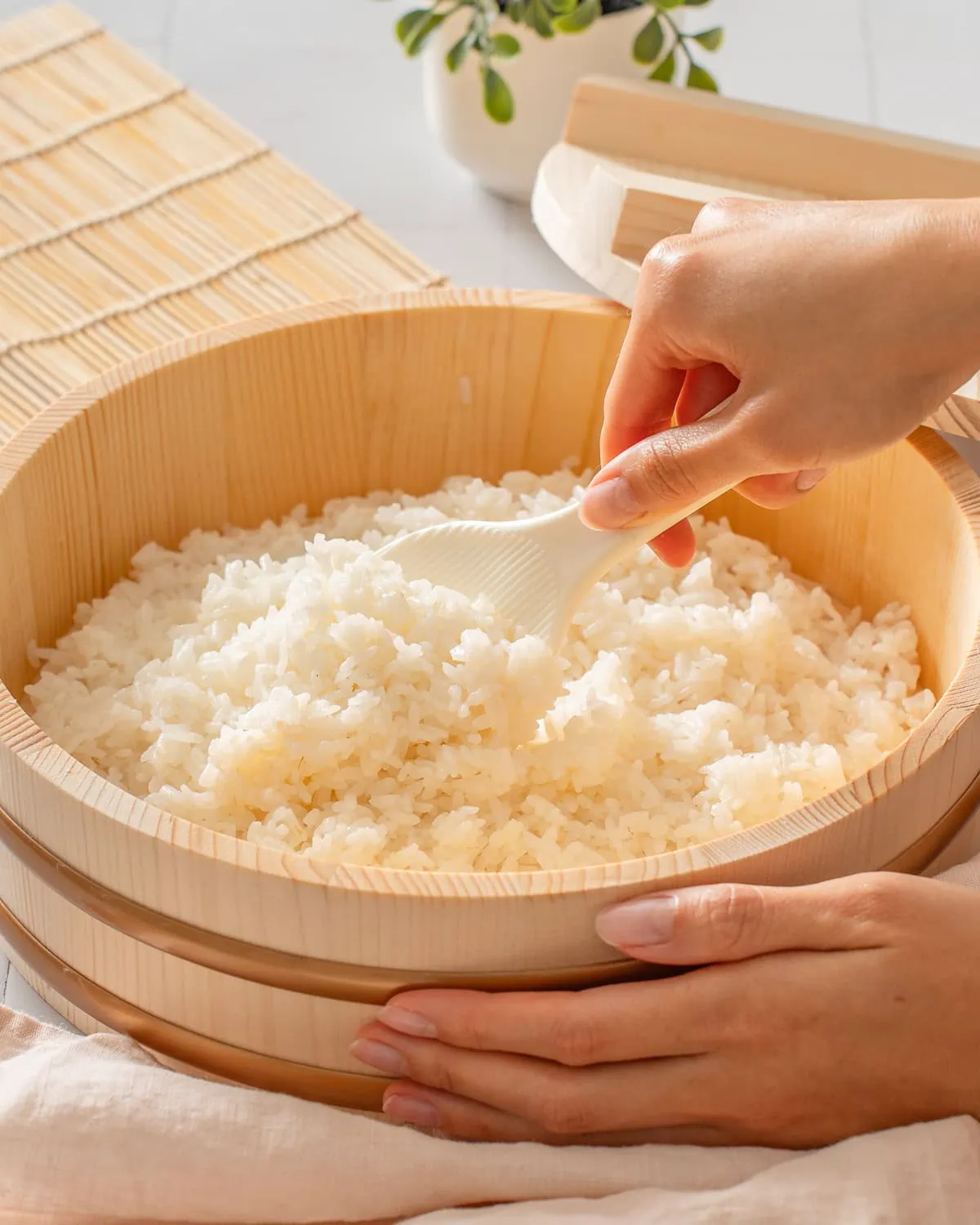
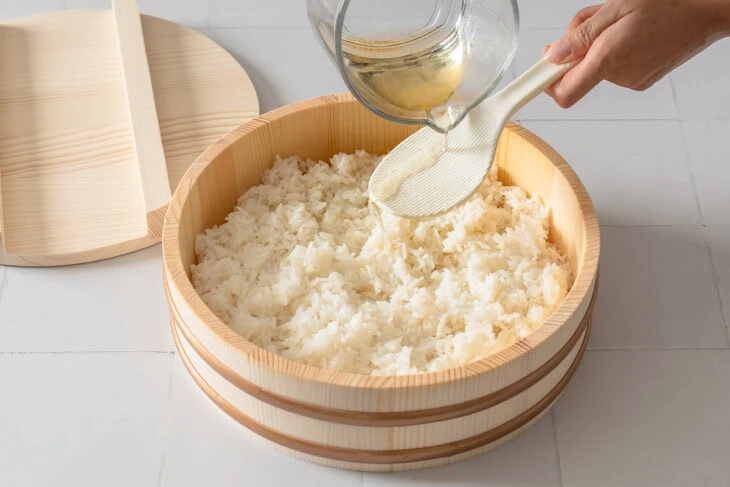
Once the rice is cooked discard the kombu, transfer to a mixing bowl or hangiri and drizzle with the vinegar mixture. Using a rice spatula, gently fold the rice until the vinegar has absorbed into the rice.
Cover the mixing bowl with a damp towel, and cool slightly before using it in a recipe.
Expert Tips
Wash the rice. Be sure to rinse the wash a few times until the water runs almost clear. This removes all the excess starch and prevents the sushi rice from becoming mushy and clumpy.
Alternatively, mix the sushi seasoning in the microwave. Instead of cooking the rice vinegar on the stove, you can alternatively heat the rice vinegar, sugar and salt in the microwave for 15-20 seconds until the sugar has dissolved.
Gently fold the rice. Use a rice spatula and gently fold the rice onto itself when mixing the seasoning.
Cover with a damp towel. When the rice is mixed, cover with a damp towel to prevent the rice from drying out and use the rice within the same day for best results.
Storage Instructions
Sushi rice is best served immediately, within 4-6 hours of being made, at room temperature. However, you can store it in an airtight container in the refrigerator for up to 3 days.
Reheat: Drizzle a few drops of water over the rice, then cover with a damp paper towel and microwave until warm.
Pairing Suggestions
Sushi rice can be used with just about any sushi recipe. Here are a few pairing suggestions.
Japanese short-grain rice, typically labeled sushi rice on the packaging, is the ideal type of grain to use. It has a sticky yet firm texture that is ideal for absorbing seasoning and sticking together to form rolls or nigiri.
Do you need to soak sushi rice before cooking?
Not necessarily; some recipes call for soaking for 20-30 minutes before cooking for even consistency. However, using a rice cooker, you can bypass that time and cook the rice directly.
Why did my sushi rice come out mushy?
A few common reasons for mushy sushi rice could be from 1) not draining all the water when you wash the rice and adding too much water before cooking, 2) not washing the rice enough to remove all the excess starches, or 3) stirring too aggressively when fluffing and seasoning the rice.
Let’s make sushi at home! This detailed guide on how to make sushi rice offers the perfect seasoning ratio and all the essential tips to make the best rice for your favorite sushi recipe.
Measure the rice. Measure the rice using a standard measuring cup and place it in the rice cooker bowl or pot.
Wash the rice. Thoroughly wash the rice 2-3 times using your hand until the water turns almost clear. Drain all the excess water.
Cook the rice. Add the water and kombu (if using) and cook the rice in a rice cooker. Alternatively, place the rice, water, and kombu into a small pot and bring to a simmer over medium-high heat. Then reduce the heat to medium-low, cover the pot, and cook for 16-18 minutes or until the water is absorbed. Let the rice sit for 10 minutes.
Make the sushi vinegar. In a small pot over medium heat, add the rice vinegar, sugar, and salt, and mix until everything has dissolved. Bring the mixture to a gentle simmer, then remove from the heat.
Combine. Once the rice is cooked, discard the kombu, transfer to a hangiri or large mixing bowl, and drizzle with the sushi vinegar. Using a rice spatula, gently fold the rice until the vinegar has absorbed.
Serve. Cover the mixing bowl with a damp towel and cool slightly before using it in a recipe.












Rate & Review What did you think of this recipe?