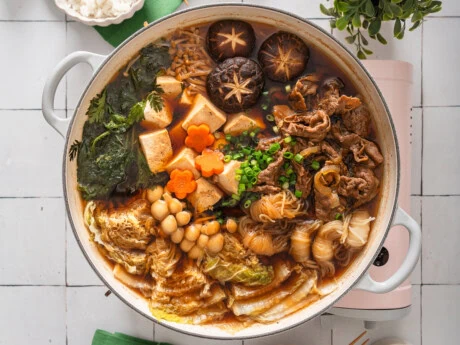
This sukiyaki recipe is a cozy Japanese hot pot made with tender, thinly sliced beef, tofu, mushrooms, and fresh vegetables simmered in a rich, sweet, and savory soy sauce broth.
This sukiyaki recipe is a cozy Japanese hot pot made with tender, thinly sliced beef, tofu, mushrooms, and fresh vegetables simmered in a rich, sweet, and savory soy sauce broth.
This Post May Contain Affiliate Links. Please Read Our Disclosure Policy.
I first discovered sukiyaki on my last trip to Tokyo at a small, hole-in-the-wall izakaya on a cold, rainy day, and I’ve been thinking about it ever since. I love how the tender, thin slices of beef, leafy vegetables, mushrooms, and tofu soak up the rich, sweet, and savory broth.
What I love the most about this Japanese beef hot pot is how easy it is to make and how many vegetables I can pack into one meal. Everything cooks quickly in just one pot in under 30 minutes, and the sauce brings all the flavors together. It’s the perfect cozy, cold-weather meal that satisfies the whole family.
Sukiyaki is a traditional Japanese hot pot dish that is made with thinly sliced marbled beef, firm tofu, a variety of mushrooms, cabbage, chrysanthemum greens, and shirataki noodles that are simmered in a sweet and savory soy sauce-based broth. It is served family-style with a bowl of rice and is popular for gatherings and special occasions.
The sauce is called warishita, which is made with a combination of soy sauce, mirin, sake, and sugar. The sauce is then combined with a dashi broth to create a nice balance of sweet, savory, and umami flavors.
For this recipe, I used a loose kanto-inspired approach that sears the beef and then simmers it with the sauce. I found it much easier to cook everything together in one pot
Ingredients
You can find all the ingredients for this sukiyaki recipe at your local Japanese grocery market. Full measurements and links to everything I used are in the recipe card below.
Beef: is the star of the recipe, so I recommend thinly sliced ribeye, chuck, or top blade with nice, even marbling throughout. The fat keeps the beef tender and adds richness to the broth.
Tofu: I recommend using firm tofu because it holds its shape better when simmered.
Mushrooms: I used a combination of shiitake mushrooms, enoki mushrooms and shimeji mushrooms. The shiitake add umami flavor, the enoki add delicate texture, and the shimeji add both.
Vegetables: I used napa cabbage, chrysanthemum greens, and carrots for a garnish. The napa cabbage adds natural sweetness to the broth, and the chrysanthemum greens add a light bitterness that balances it.
Yellow Onion and Green Onion: for added aromatics and extra flavor.
Shirataki Noodles: are traditional Japanese konjac noodles that are slightly chewy and springy in texture.
Dashi stock: I like adding a little more dashi stock than traditionally because it adds extra umami and prevents the sauce from being too concentrated.
Sukiyaki Sauce
Soy Sauce: is the base of my sauce that gives it a deep, savory umami flavor. I recommend using a Japanese soy sauce for the most balanced flavor.
Mirin: adds a subtle sweetness that complements the soy sauce.
Sake: adds another layer of flavor. I like to use cooking grade sake.
Sugar: adds sweetness to balance the rich, umami flavors.
Variations and Customizations
Mushrooms: any type of mushrooms like oyster, maitake or cremini can also be added.
Leafy Greens: spinach, watercress or bok choy are also delicious options for this hot pot.
Noodles: udon or ramen are good alternatives to shirataki.
Dashi: water or kombu dashi are good alternatives.
How to Make
Here are the step-by-step instructions with photos for how to make this easy Japanese sukiyaki recipe at home.
In a small saucepan over medium heat, add the sauce ingredients and simmer for 2-3 minutes.
In a deep skillet, heat 1 tablespoon of oil over medium high heat and sear the onions until softened. Then push to one side and sear the beef on both sides for about 1 minute.
Pour half the sauce and simmer for 1 minute.
Next, arrange the tofu, mushrooms, vegetables, and noodles in the pot. Then pour in the dashi broth and the rest of the sauce. Cover and simmer until the veggies are tender.
Serve with white rice. Enjoy!
What I Learned Testing This Recipe
Use high-quality beef. This dish relies heavily on the freshness and quality of its ingredients. For the best taste, use well-marbled, thinly sliced beef.
Try not to overcook the beef. The beef only needs a quick sear because it will be cooked again in the sauce.
Sauce ratio is 1:1:1. The sauce ratio will always be a 1:1:1 ratio for soy sauce, mirin, and sake. If you need to increase or decrease the amount of sauce, this is an easy rule to follow.
Adjust the sugar to taste. My level of sweetness isn’t too sweet. If you prefer a sweeter sauce, add more sugar to taste.
Add more dashi for a more diluted broth. The sauce is a pretty concentrated salty, sweet flavor. For a lighter broth that you’d like to slurp, I recommend adding 1-2 more cups of dashi broth to taste.
Storage Instructions
You can store any leftover sukiyaki in an airtight container in the refrigerator for up to 3-4 days. The beef and vegetables will absorb the flavor of the sauce and may become more concentrated over time.
Reheat: Place the leftovers in a saucepan, cover, and cook over medium heat until hot. Add more water or dashi if the sauce has evaporated and become too salty.
Freeze: If you’d like to freeze it, I recommend freezing it before cooking. Store the beef, tofu, and vegetables separately from the broth in an airtight container for up to 3 months. Thaw in the refrigerator overnight before cooking.
How to Serve
Sukiyaki is typically served family-style with a bowl of steamed white rice and a raw egg for dipping the beef. However, in the United States, it may be unsafe to eat a raw egg, so this is optional. If you serve with an egg, I recommend using a pasteurized egg. To finish, I like to add cooked udon noodles at the end to soak up the remaining broth.
What is the difference between sukiyaki and shabu-shabu?
Both are popular Japanese hot pot dishes, but they differ in flavor and cooking method. Sukiyaki sears the beef and then cooks it in a pot alongside vegetables in a rich, sweet, and savory soy sauce broth. Shabu-shabu, by contrast, involves boiling the beef and vegetables in a lighter, kombu-based broth.
What cut of beef is best for this recipe?
I like to use well-marbled, thinly sliced cuts of beef like ribeye or top-blade. Look for beef labeled sukiyaki beef at an Asian or Japanese grocery store. You’ll also find thinner packages labeled shabu-shabu.
Can I make this recipe in advance?
Yes! You can prepare the sauce and wash and cut the vegetables ahead of time in the refrigerator. Simply cook the beef and the soup when you are ready to serve.
Cook the sauce. In a small saucepan over medium heat, add the sake, mirin, soy sauce, and sugar. Bring to a boil, then simmer for 2-3 minutes.
Cook the onions and beef. In a deep skillet, heat 1 tablespoon of oil over medium-high heat until hot, then sear the onions until softened, about 1-2 minutes. Then push to one side and sear the beef on both sides for about 1 minute.
Simmer in the sauce. Pour half the sukiyaki sauce and simmer for 1 minute.
Add the vegetables. Next, arrange the tofu, shiitake mushrooms, enoki mushrooms, shimeji mushrooms, carrots, napa cabbage, chrysanthemum greens, shirataki noodles, and green onions in the pot. Then pour in the dashi broth and the rest of the sukiyaki sauce. Cover and simmer until the veggies are tender, about 10 minutes.
Serve. Serve with white rice. Enjoy!
Notes
If using dashi powder, use 1 teaspoon of dashi powder per 1 cup of boiling water.
See the What I Learned Testing This Recipe for more guidance.






Rate & Review What did you think of this recipe?